Secret Tips to Grow Bushier Pothos Without a Single Trim
Pothos naturally wants to vine and trail. A few overlooked habits can coax it into bushier growth without ever picking up the shears. From how you position it near light to how you water it, small changes add up over time into a plant that looks lush and full. No pruning skills required. Just a little. The right conditions.

Michael Breg
EDITOR
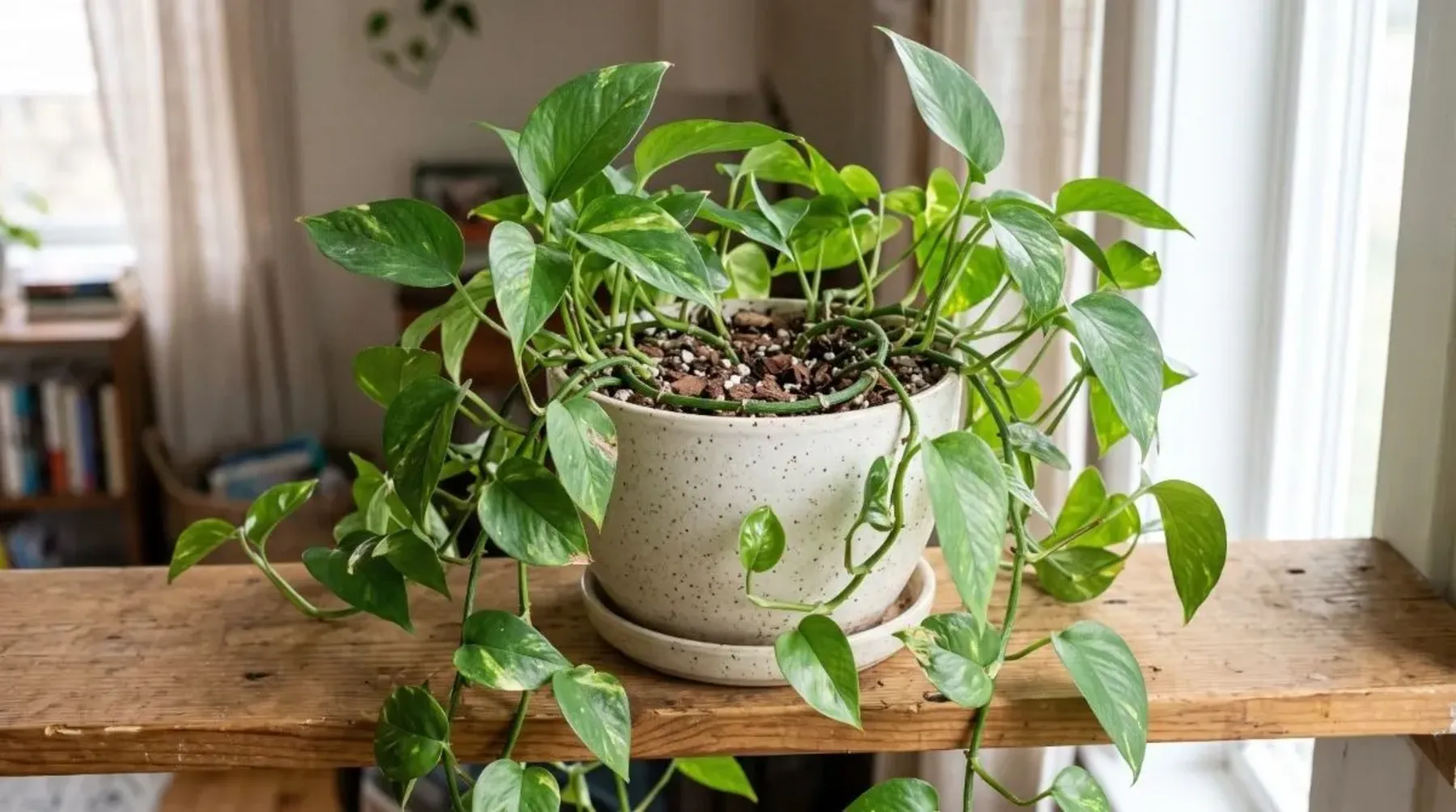
If you have ever stared at your pothos and wondered why it looks like a sad vine hanging off the shelf of the lush cascading jungle you see on Pinterest, you are not alone. Most people think the way to get that full look is to chop the pothos back and wait for it to branch out. Here is the thing: pruning is not the trick in the book. With a shift in how you care for your pothos, you can coax the pothos into growing fuller without ever picking up a pair of scissors. It just takes understanding what triggers growth points. Give the pothos the conditions it needs to produce more on its own.
Give the Pothos Light Than You Think It Needs
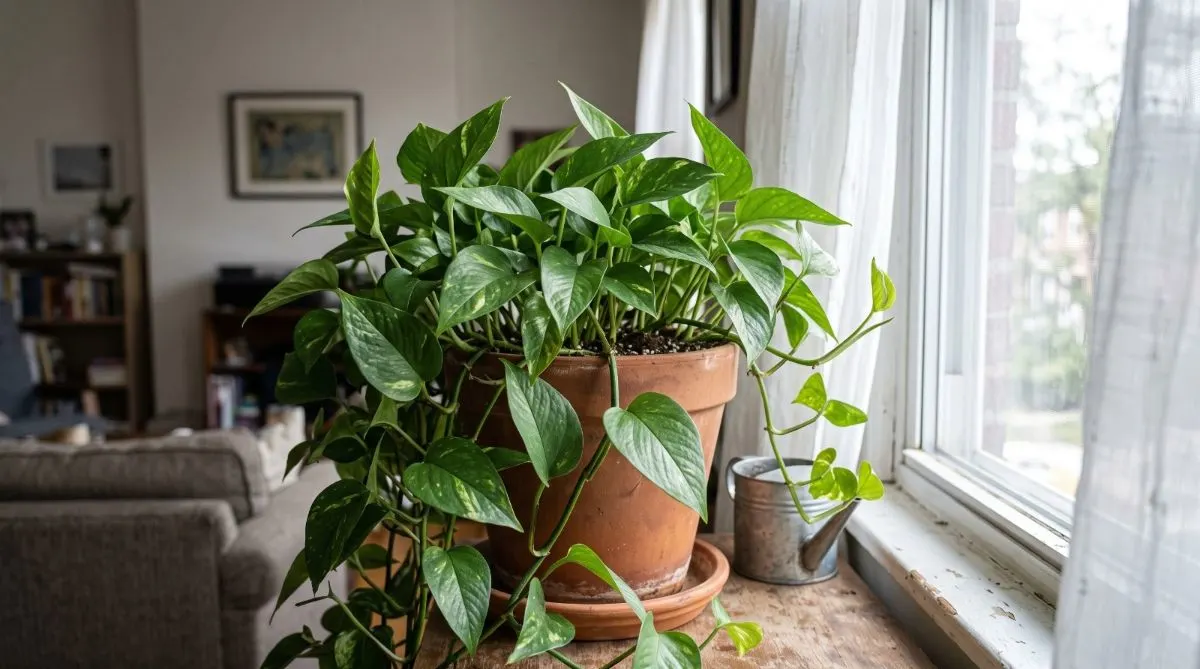
Pothos has a reputation as a "light survivor." It is. Surviving and thriving are two very different things. In corners, the pothos tends to stretch out with gaps between leaves, chasing whatever light it can find. Move the pothos closer to a bright window. You will notice the internodes (the spaces between leaves) start to shrink. Tighter spacing means more leaves packed into the length of the vine, which reads fullness without any trimming at all.
Rotate the Pot Regularly
Plants grow toward their source, which is why one side of the pothos often looks packed while the other side looks bare and leggy. Give the pot a quarter turn every week or so. This encourages growth on all sides. Over time, this helps the pothos fill out symmetrically.
Let the Vines Trail Then Redirect Them
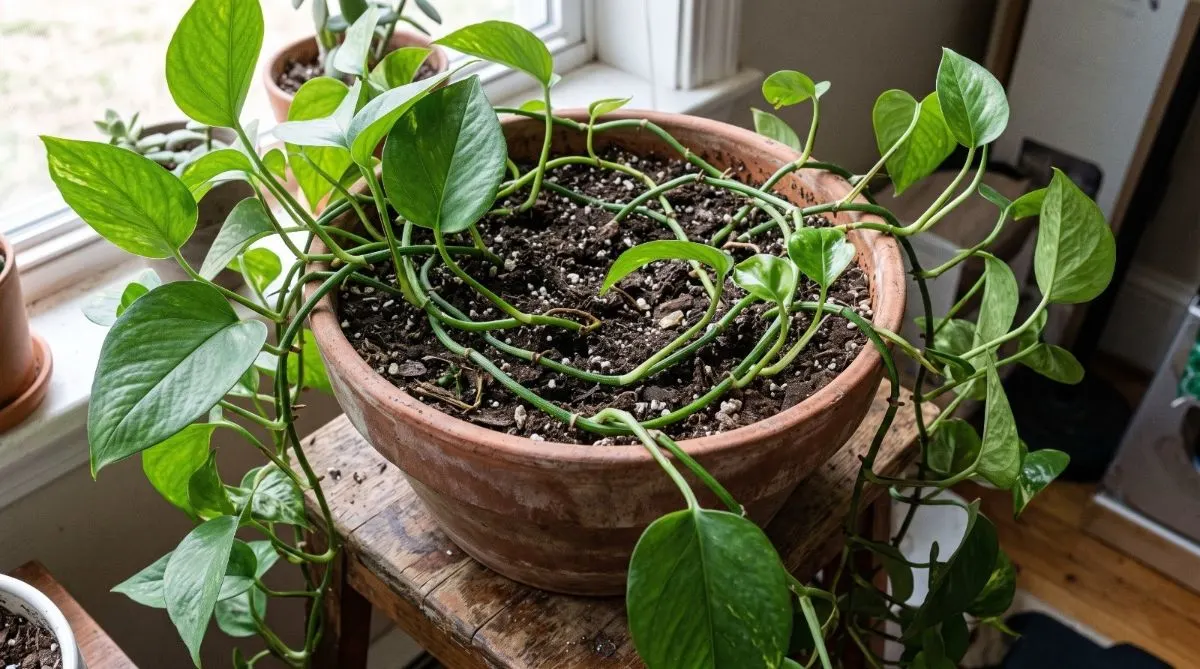
Instead of cutting long vines, try looping them back into the pot’s soil or training them along a small trellis so they curl back toward the base. When a vine bends, or the growing tip touches soil, it can send out roots and even new growth shoots at the nodes in humidity. This is self-layering. It thickens the pothos from the inside without removing a leaf.
Feed the Pothos During Active Growth
A pothos will not push out growth points no matter how light it gets. During spring and summer, a diluted balanced liquid fertilizer every three to four weeks gives the pothos the energy reserves it needs to keep producing leaves rather than maintaining the ones it has.
Boost the Humidity Around the Pothos
The pothos is native to forest floors. While it tolerates indoor air, it does not flourish in it. Higher humidity encourages nodes to wake up and produce leaves. A pebble tray, an occasional misting, or grouping the pothos near plants can make a difference over a month.
Check the Roots of the Pothos
A pothos that has outgrown its pot often slows down on growth simply because it is out of room. If you haven't repotted in over a year, you may see roots circling the drainage holes and the pot filling up (one size up, not a jump), which can reignite growth without any cutting involved.
Wipe the Leaves of the Pothos Down
Dust might sound like an issue. A layer of it blocks absorption and slows photosynthesis. Wiping the plant's leaves with a cloth every couple of weeks keeps it working at capacity, supporting steadier growth over time.
Now let's discuss the popular bobby pin method:
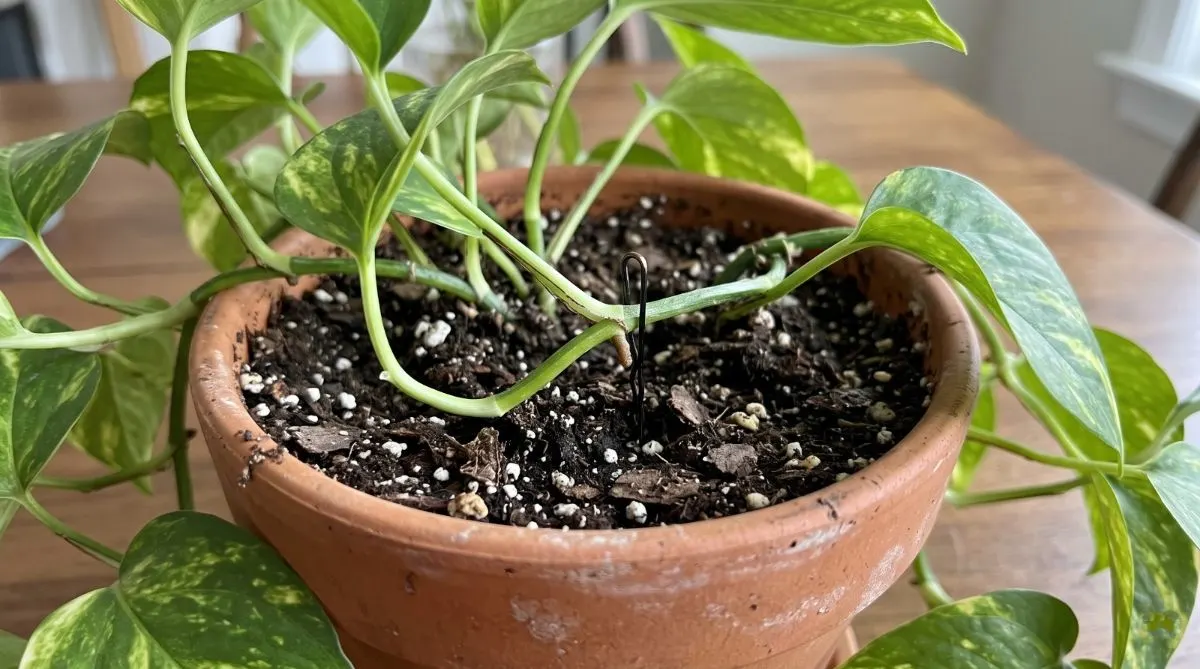
To start, you need to :
Find a node. Look at the vine for the bumps on the nodes because that is where the roots and leaves start. Choose a section of vine that has two or three nodes.
Lay the vine flat over the soil. Do not cut it away from the mother plant; simply drape the vine over the pot or a nearby pot so that a node meets the soil.
Pin the node down. Use a bobby pin, a paperclip, or a floral pin to hold the node against the soil. Keep the leaves and tip above the surface.
Keep it moist. Water as usual. The pinned node needs contact with soil to develop roots usually in three or four weeks.
Leave the vine attached. Do not cut it from the mother plant. It continues to feed the roots as they grow, so the cutting doesn't feel stressed.
Repeat along the vine. You can pin nodes on the vine spaced apart to create many new rooting points at the same time.
Unpin the node once it has rooted. Gently tug after a month; if you feel resistance, the roots are ready. You may keep it attached for a shape or cut it free later if you prefer a separate plant.
The result is shoots that grow from each node. The plant expands from points, not by stretching longer vines, and you never have to cut a healthy stem away first.
Frequently Asked Questions (FAQs) :
QUESTION :
Will pinning the vines hurt the plant?
ANSWER :
No. Pothos naturally produce roots at their nodes designed to grip surfaces and absorb moisture, so pressing them into damp soil simply mimics their natural growing habits.
QUESTION :
Do I bury the pinned stems under the soil?
ANSWER :
Keep the nodes resting on top of or lightly touching the soil surface rather than burying the whole vine deep underground, which can cause the stem to rot from lack of airflow.
QUESTION :
How long does it take to see shoots from pinned vines?
ANSWER :
You will generally notice root systems and baby growth tips emerging along the soil contact points within 2 to 4 weeks.
QUESTION :
Can low light ruin a look?
ANSWER :
Yes. If a pothos doesn't get indirect sunlight, it will stretch out and become leggy again, no matter how many stems you coil into the pot.

Written by Michael Breg
Studio Writer.
Enjoyed this informational guide?
Discussion (0)
No comments yet. Be the first to share your thoughts or ask a question!
Join the Discussion
Your email address will not be published. Required fields are marked *
More from Gardening

7 Ways to Grow Indoor Plants in Low Sunlight Apartments (Beginner-Friendly Guide)
Living in a low-light apartment doesn't mean you can't enjoy beautiful indoor plants. Discover 7 practical ways to grow healthy houseplants with minimal sunlight, plus the best plant choices and beginner-friendly care tips.