Table of Contents
Why Low-Light Apartments Can Still Support Healthy Plants
Choose Plants That Naturally Prefer Low Light
Find the Brightest Spot in Your Apartment
Rotate Your Plants Regularly
Avoid Overwatering in Low-Light Conditions
Keep Plant Leaves Clean
Increase Humidity Around Your Plants
Supplement with Grow Lights When Needed
Step-by-Step Beginner Setup
Common Mistakes
Pro Tips
Recommended Products
Frequently Asked Questions
Conclusion
Introduction
You have heard that it is hard to keep plants alive in your apartment, haven’t you? You remember watching a plant that had been struggling to survive lose all of its leaves and give up and thinking, “Well, I guess I can’t do it, either.” If so, you are far from alone - most people who are just getting into plant care think that plants need lots of sun, but it isn’t true. In fact, many popular houseplants are actually shade-loving by nature!
These plants are used to growing in the woods, where they have to make do with whatever indirect light filters down from the canopy and manage. Some varieties, like Snake plants, ZZ plants, Peace lilies, Pothos, and Cast Iron plants are particularly good about thriving in apartments where little sunlight reaches the windows.
This guide will show you how to care for houseplants in a low-light apartment. It gives seven easy-to-follow beginner tips for making your plants grow lush and healthy despite the challenge of a dimly lit space. It also shares some pro tips on avoiding the most common mistakes and provides you with helpful product recommendations to make houseplant care easier.
1. Choose Plants That Naturally Prefer Low Light
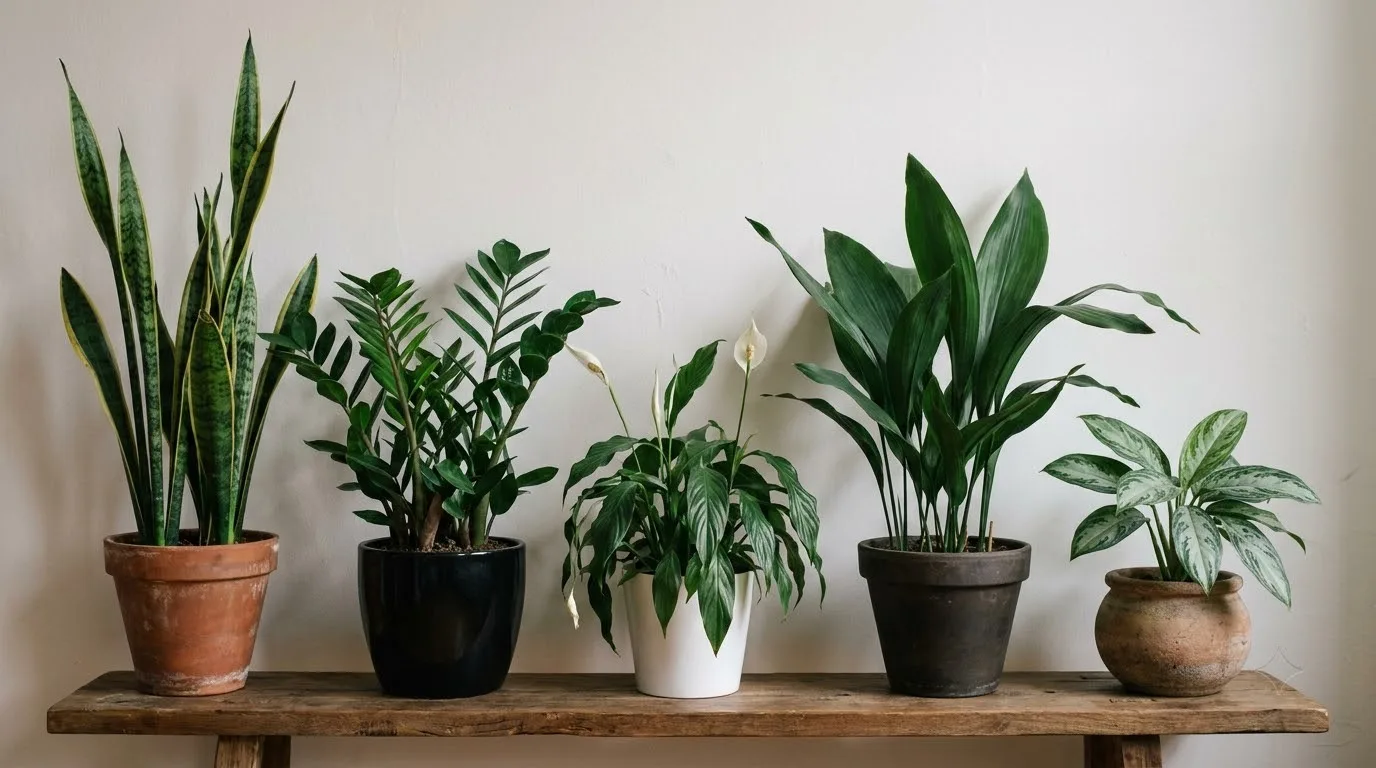
The first and most obvious solution to a dark apartment with no houseplants is choosing plants that prefer low light. Snake plants ,ZZ plants ,Peace lilies ,Pothos vines , and Cast Iron plants are all excellent options that can flourish even in an apartment room that sees little daylight.
Note: The term "low light" does not mean "no light." Even the most resilient plants require some natural or artificial light.
Here are some solid choices:
🌿 Snake Plant (Sansevieria)
Snake Plants are almost impossible to destroy. They won't mind if you forget to water them or if the air is extremely dry.
Benefits
Extremely low maintenance
Needs watering only every few weeks
Survives in dry indoor air
Helps purify the air
🌿 ZZ Plant
The ZZ Plant is known for its ability to thrive in most places. Their roots store water, so they can withstand being forgotten about or dried out
Benefits
🌿 Pothos
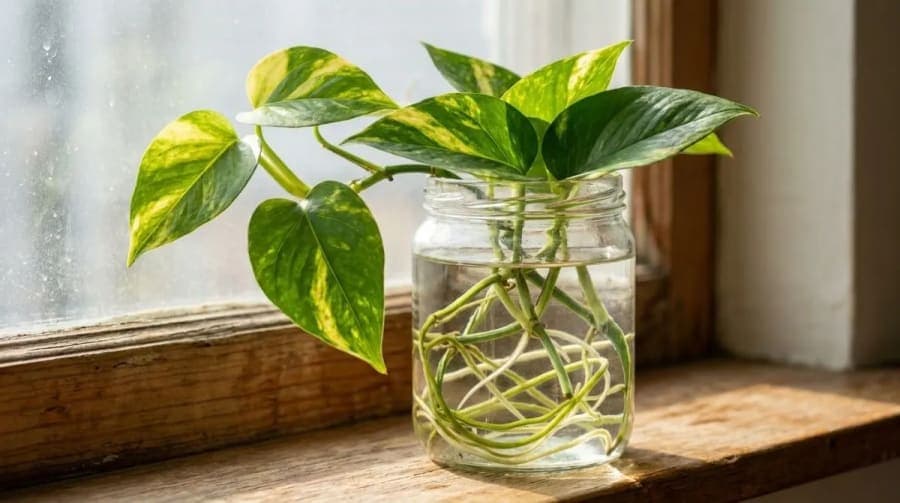
Pothos vines are very quick growers and tend to trail nicely wherever they are placed. They do best in brighter conditions, but they are happy enough in low light, too
🌿 Peace Lily
Peace lilies are generally fairly hardy houseplants with broad, attractive leaves and beautiful white flowers that bloom intermittently. The more light they get, the more flowers they produce, but they are still comfortable in dim surroundings
🌿 Cast Iron Plant
As the name suggests, it's very difficult to kill.
It tolerates:
Poor lighting
Dry air
Temperature changes
Neglect
2. Place Plants in the Brightest Spot Available
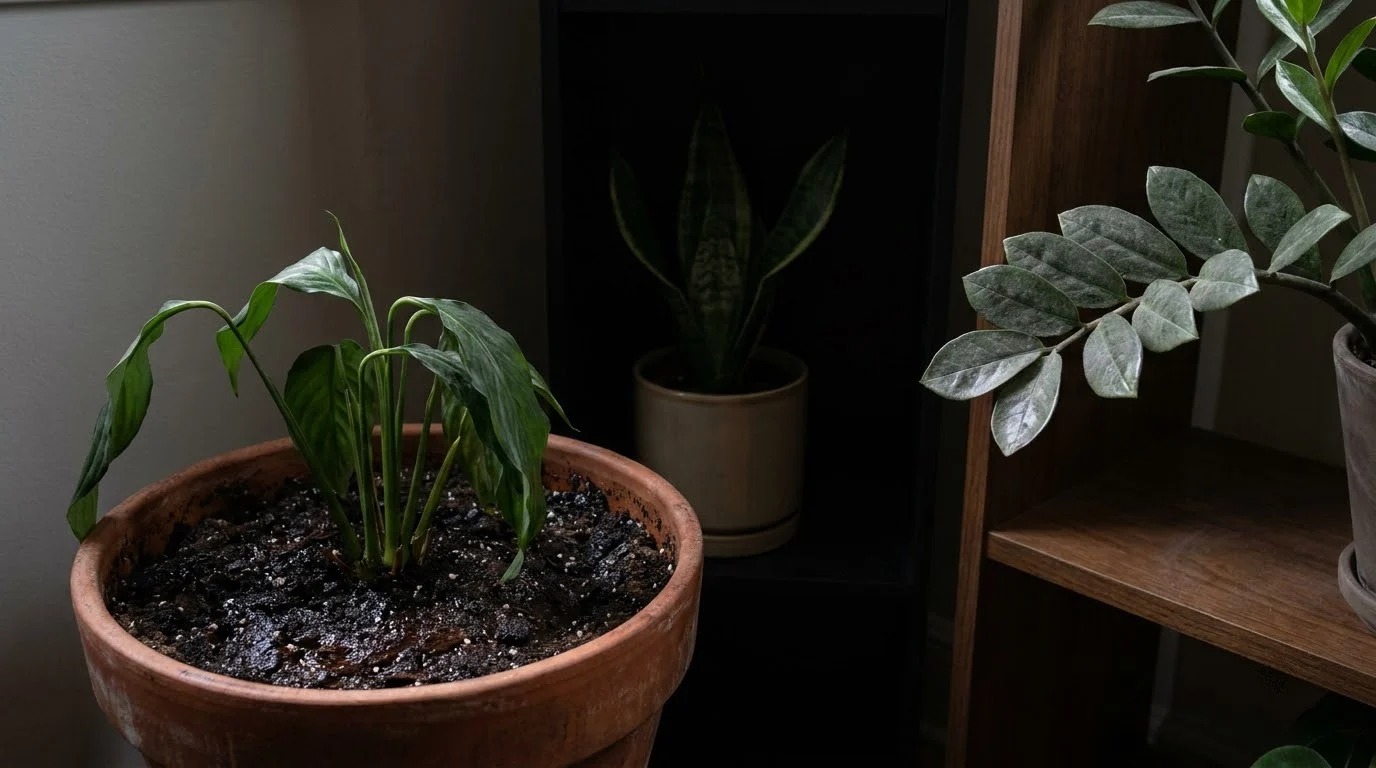
One common beginner mistake is thinking that low-light plants can tolerate complete darkness. In fact, they still need at least some illumination. The trick is to find the brightest spot of your apartment and place your plants there.
Good places include:
Near north-facing windows
Close to east-facing windows
Beside glass doors
Bright hallways
Rooms with light-colored walls that reflect light
Avoid places like:
3. Rotate Your Plants Every Week
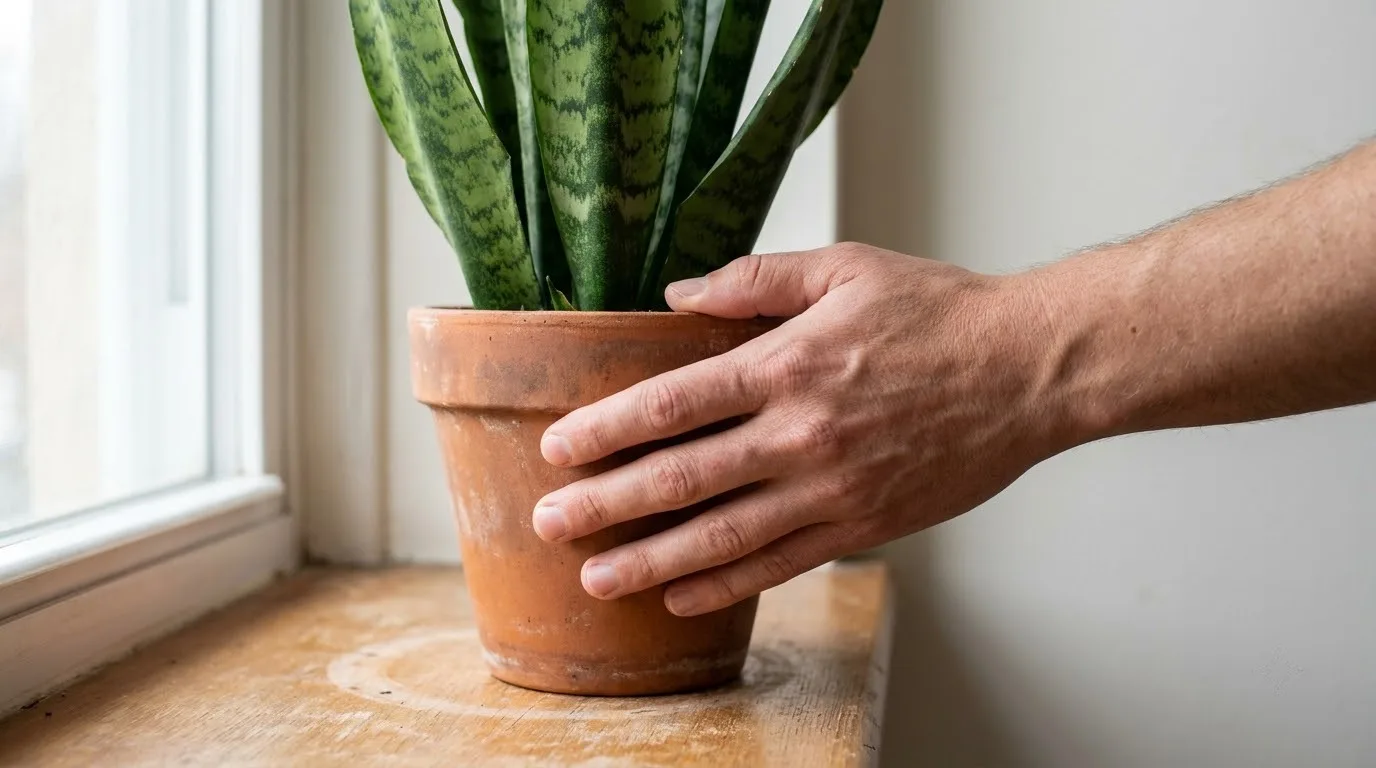
Like all plants, houseplants will lean toward the light source. This means that if you always keep your plant in the same orientation, it will start to look lopsided as it tries to bend and twist toward the biggest source of illumination. The best way to prevent this is to simply rotate your plants by a quarter turn every week or so.
Benefits
Balanced growth
Straighter stems
Fuller appearance
Better overall shape
4. Water Less Often Than You Might Expect
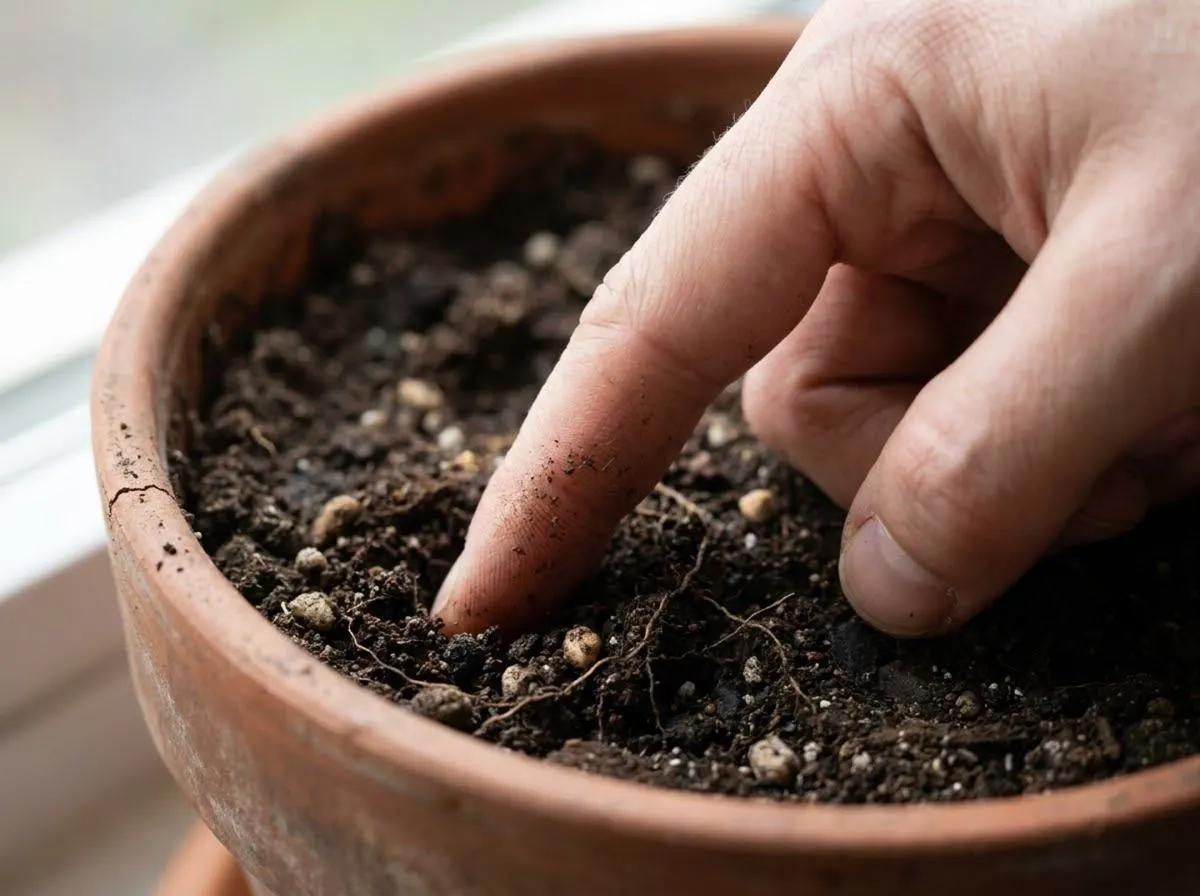
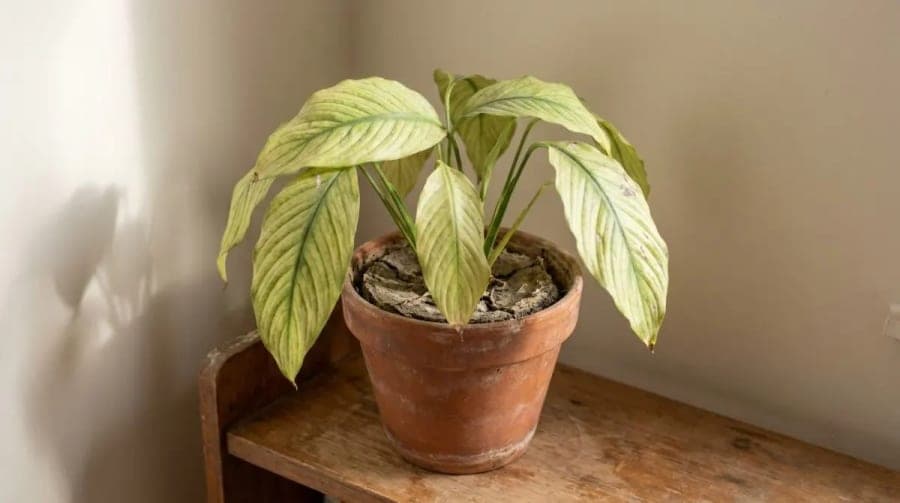
Most commonly, houseplants are killed by being overwatered rather than underwatered. In general, plants that are placed in low-light environments benefit from being watered less frequently because they don’t photosynthesize as actively and consequently don’t need as much hydration. Before giving your plant another drink, check to see if the top of the soil is dry.
Before watering:
Put your finger about an inch into the soil.
If it still feels damp, wait a few more days.
Water only when the top layer feels dry.
Always use planting pots with drainage holes so that extra moisture can escape the soil and not cause the roots to rot
Signs of overwatering
Yellow leaves
Wet stems
Moldy soil
Remember the simple growing mantra :
If you aren't sure, wait.
5. Keep Your Plant Leaves Clean
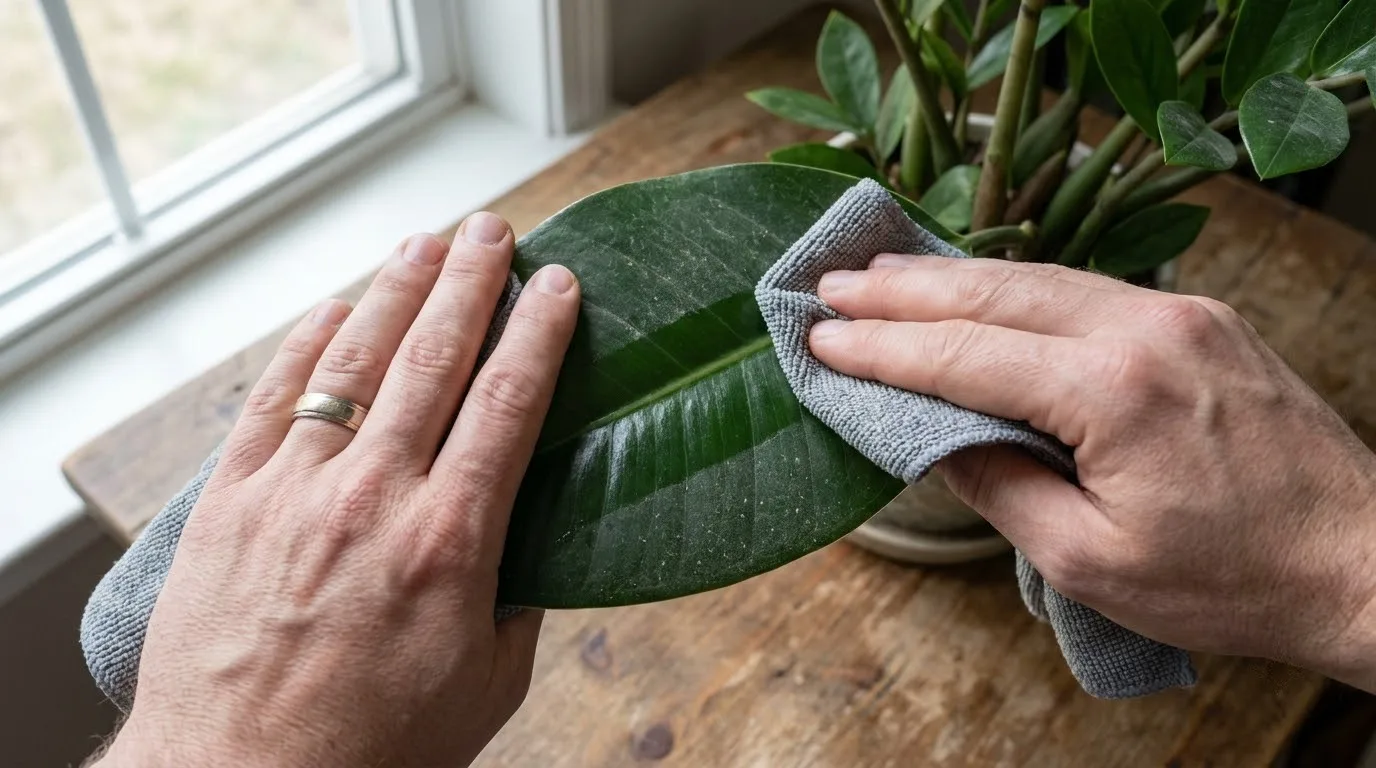
It may seem like a small thing, but dust on leaves can prevent a plant from properly photosynthesizing. Leaves essentially act as solar panels for the plant, capturing light energy and converting it into food. When they are dirty, the process becomes much less efficient, and the plant essentially starves.
As a result, you should gently wipe away any dust you see on your plant’s leaves every few weeks
There is no need to use any particular cleaning product - merely a damp cloth will do. While you are cleaning, inspect the leaves for any insects or dead spots that might need to be trimmed off
Give extra attention to:
Monstera
Rubber Plant
Peace Lily
Fiddle Leaf Fig
ZZ Plant
6. Boost Humidity Levels
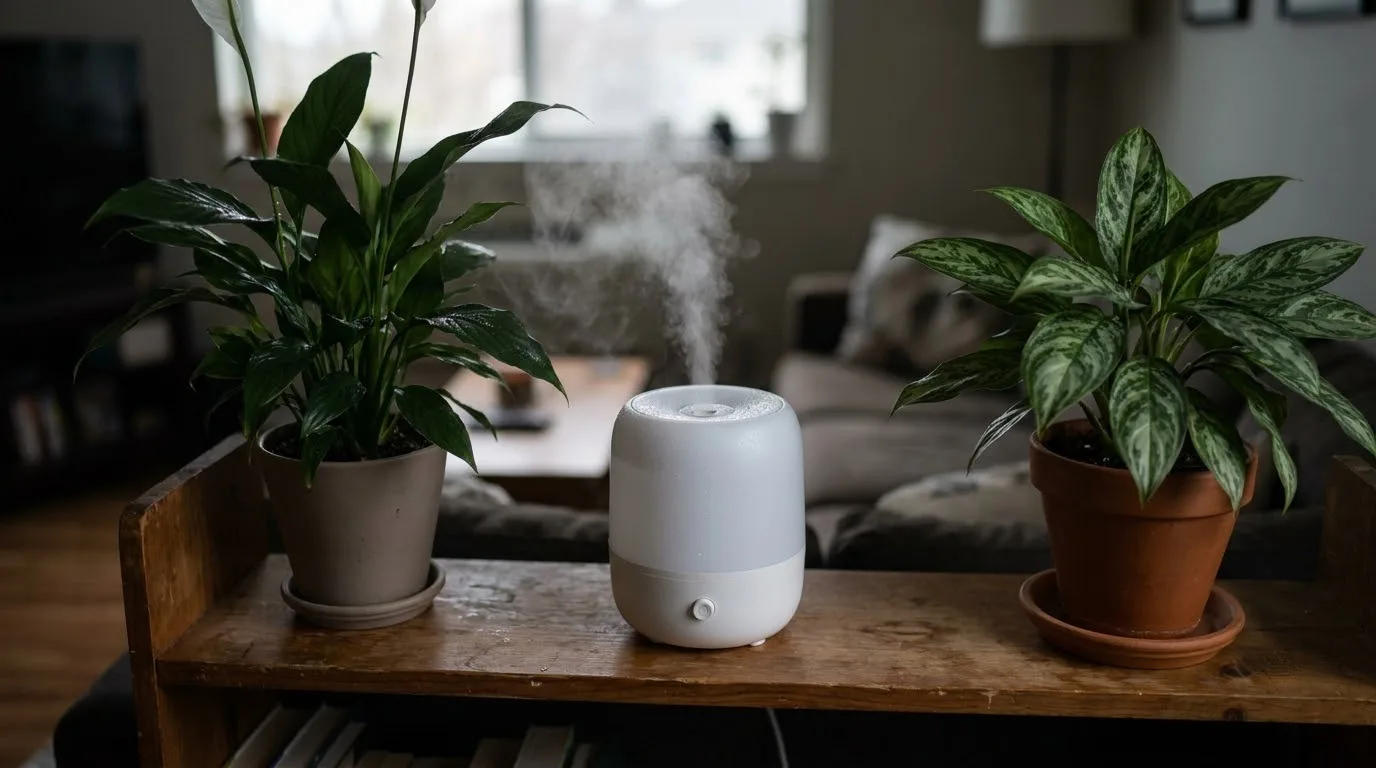
Most tropical houseplants like it a bit more humid, and if you have a space heater or an air conditioner, you might be unintentionally damaging your plants without realizing it. The dry heat and cold blasts of these machines rob the air of much-needed moisture, leaving your plants’ leaves parched and brittle.
Easy ways to increase humidity
Avoid placing your plants near
Heaters
Air-conditioning vents
7. Use Grow Lights if Necessary
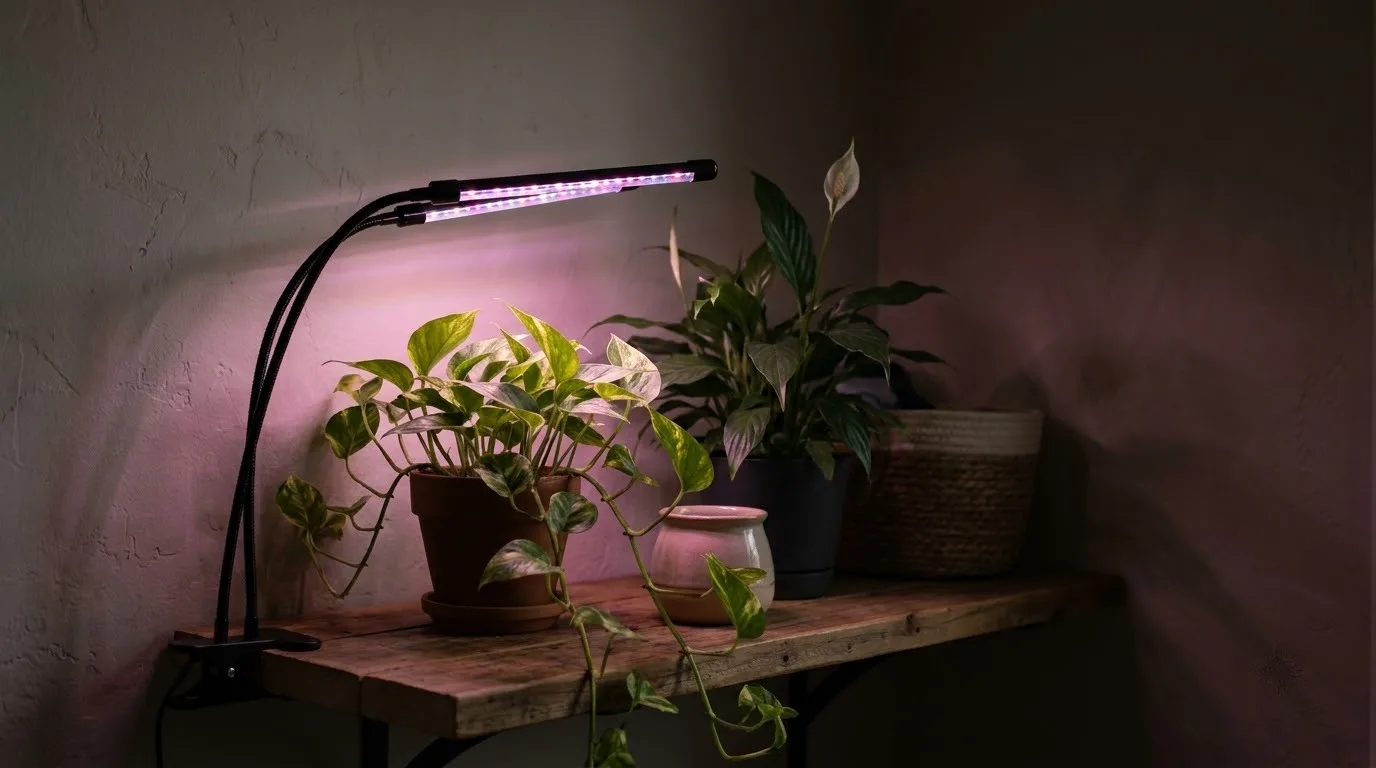
If you find that your apartment simply doesn’t get enough light for your plants to thrive, you may want to invest in a grow light.
Modern grow lights are:
Things to look for:
Full-spectrum LEDs
Built-in timers
Dimmers
Setup
Place the grow light about a foot or so above your plant and leave it on for 10 to 12 hours per day, being sure to turn it off at night.
Step-by-Step Beginner Setup
Choose one or two easy-care plants, like Snake plants or ZZ plants.
Place them somewhere bright but not in direct sunlight.
Use pots with drainage holes.
Water only when the top layer of soil is dry.
Rotate them every week.
Wipe the leaves every month.
If the plants still appear unhappy, use a grow light.
Follow this advice and your plants will thank you!
Common Mistakes Beginners Make
Picking a plant that hates your light conditions
Watering on a schedule instead of checking the soil
Putting plants in completely dark spots
Ignoring pots without drainage holes
Panicking about slow growth
Pro Tips
Move your plants once a week to ensure even growth.
If you're forgetful, keep a watering journal.
Use mirrors or light-colored walls to reflect more light.
Avoid fertilizing during winter.
Start with only a few plants until you become comfortable.
Recommended Products
Makes it easy to know when your plants need watering.
Ideal for darker apartments.
Provides better drainage and healthier roots.
Excellent for busy people—just make sure the soil stays moist rather than waterlogged.
Frequently Asked Questions
Can indoor plants live without direct sunlight?
Yes. Many indoor plants actually prefer bright, indirect sunlight.
Which indoor plant is easiest for beginners?
Snake Plants and ZZ Plants are both easy to care for and difficult to kill.
How can I tell whether my plant isn't receiving enough light?
Look for:
Stretched stems
Pale growth
Small leaves
Yellowing leaves
Should I use a grow light every day?
If natural light is weak, use a grow light for 10–12 hours daily.
Can you keep plants in bedrooms?
Yes. As long as there is some indirect light, most houseplants grow happily in bedrooms.
Conclusion
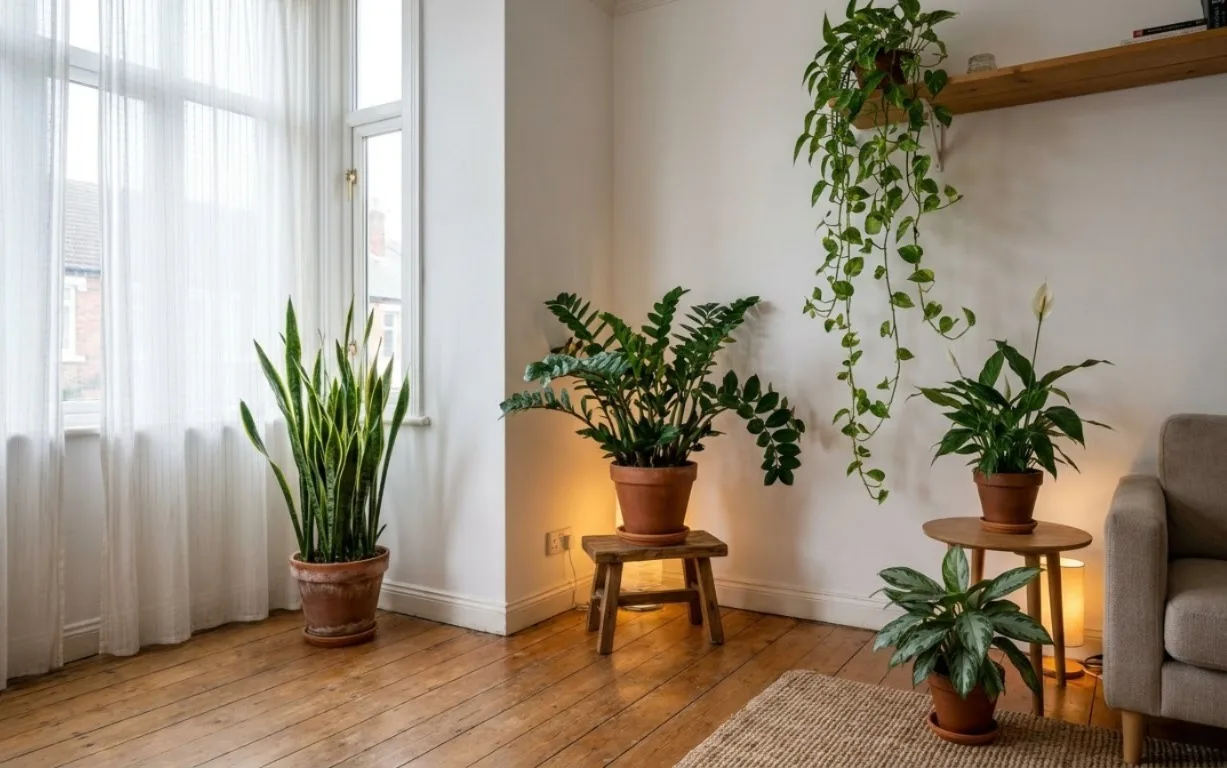
You don’t need to have a sun-drenched apartment to be able to enjoy beautiful, healthy houseplants. It just takes a little bit of planning and research to figure out how to care for your plants in whatever lighting conditions your apartment provides. Choose some easy-care houseplants like Snake plants ,ZZ plants ,or Pothos vines, and put them in bright areas, taking care to ensure that they aren’t being overwatered or left in the dark. If you find that your plants still aren’t flourishing despite these efforts, you might want to consider using a grow light.
Related Articles