How to Get Bigger Leaves on Your Monstera
Bigger Monstera leaves come down to giving the plant conditions closer to its jungle roots: strong indirect light, room for its roots to grow, regular feeding, and something sturdy to climb. Get those right, and each new leaf should come in noticeably larger than the last.

Michael Breg
EDITOR
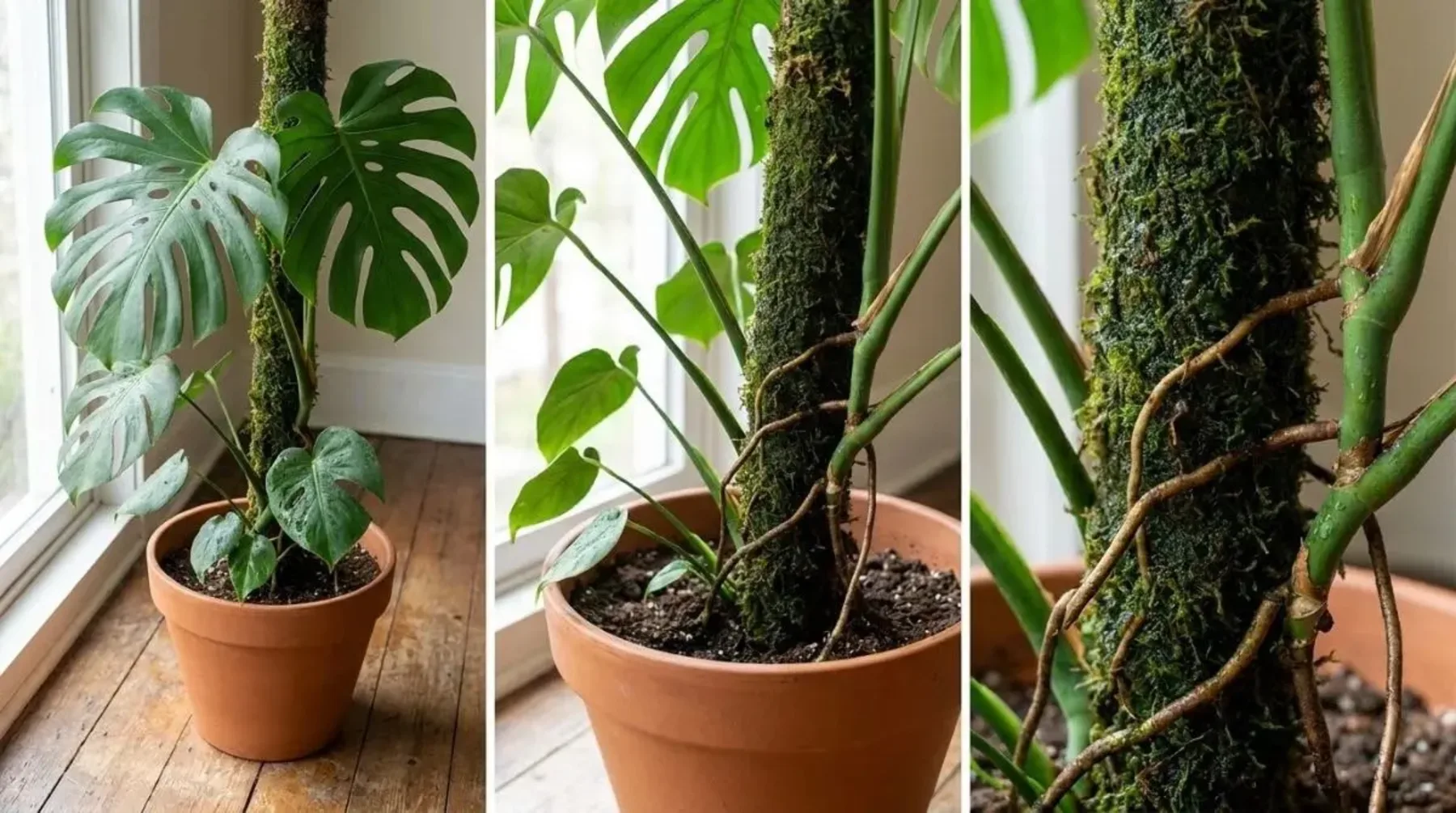
If you have ever scrolled through pictures of Monstera deliciosa whose leaves look like dinner platters, you have probably looked at your plant. Its leaves are modest and barely split. You might wonder what you are doing wrong. The good news is that nothing drastic is usually to blame. Leaf size in Monstera depends on factors that you can control. Most of them are easier than people think.
Light Is the Biggest Lever
Monstera are jungle plants, which means that in the wild they grow under filtered indirect light. Not the dim corner most of us place them in. Low light does not kill a Monstera. It forces the Monstera into survival mode and small leaves are one of the signs. The Monstera simply doesn't receive enough energy to grow larger.
Aim for light most of the day. A spot a few feet from an east- or south‑facing window or right in front of a curtain on a west-facing window usually works well. If your space is naturally dim, a grow light can make a difference much like any fertilizer.
Give the Roots Room to Work
A Monstera will keep producing leaves no matter how light it gets because it physically cannot take up enough water and nutrients to support larger growth. Check the roots every year or two. If you see them circling the pot or poking out of drainage holes, it is time to size up. Choose a pot two inches in diameter larger than the pot, not a dramatic jump. Well‑draining soil matters too. A mix heavy in bark, perlite, and coco coir mimics the aerated soil that Monstera roots evolved in and lets them expand quickly without sitting in compacted dirt.
Feed It. Don’t Overdo It
Bigger leaves take resources to build, and potting soil only holds nutrients for a time. During spring and summer, give the Monstera a liquid fertilizer every two to four weeks. Look for something with a nitrogen ratio because nitrogen drives growth. That said, more is not better. Over‑fertilizing can burn the roots. Set the plant back. Diluting to half strength is a rule. It is worth easing off in fall and winter when growth naturally slows.
Humidity Changes More Than You’d Think
In their habitat, Monsteras live in humidity levels that most homes never reach. Dry indoor air from heating or air conditioning can quietly limit leaf size even when light and feeding are good. You do not need a rainforest in your living room. Raising humidity to 50‑60 percent helps. A nearby humidifier, grouping plants together, or placing the pot on a tray can help close that gap.
Give It Something to Climb
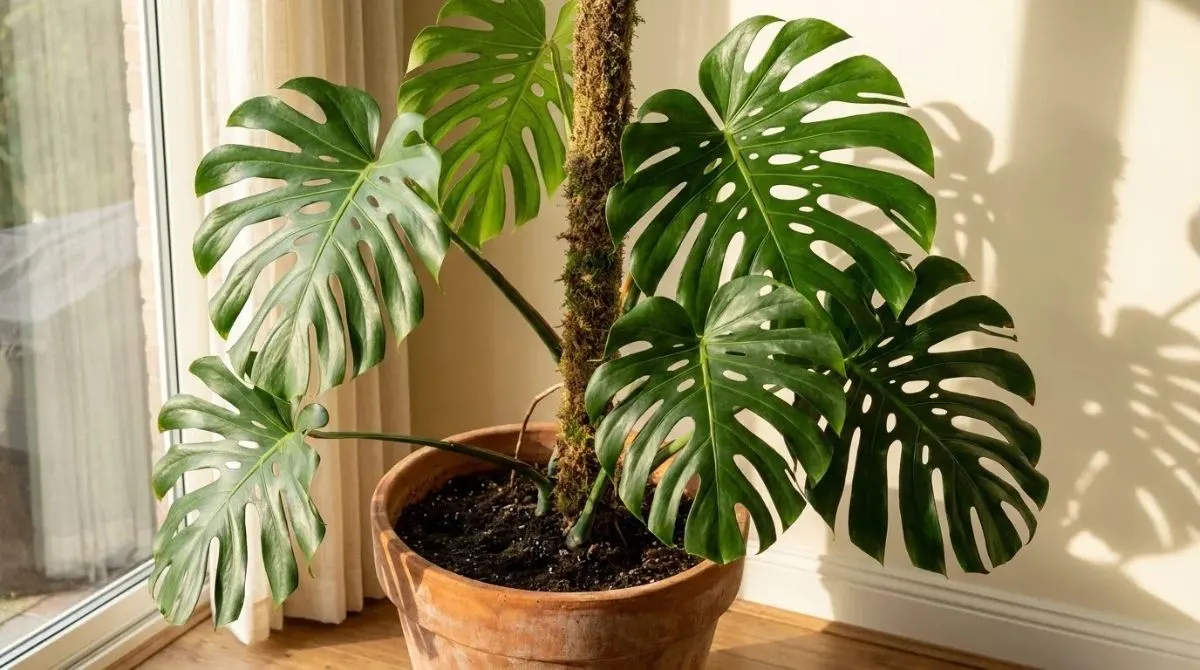
This one surprises people: Monstera in the wild are climbers, and leaf size is directly tied to that climbing habit. As the Monstera grows up a support and produces roots that anchor into it, it starts putting out more deeply split leaves than it would if it were sprawling along the ground. A moss pole or coir pole is not just decorative. It is a growth trigger. Once you add one, tuck the roots against the pole. Mist it occasionally to encourage the roots to attach.
Be Patient With New Growth
With everything dialed in, do not expect results tomorrow. Monstera generally only get split leaves as the plant matures. Each new leaf tends to be larger than the one gradually over months. The leaf that is unfurling now was already determined by conditions the Monstera had weeks ago, so changes you make today will show up in leaves a few nodes from now, not tomorrow.
Conclusion
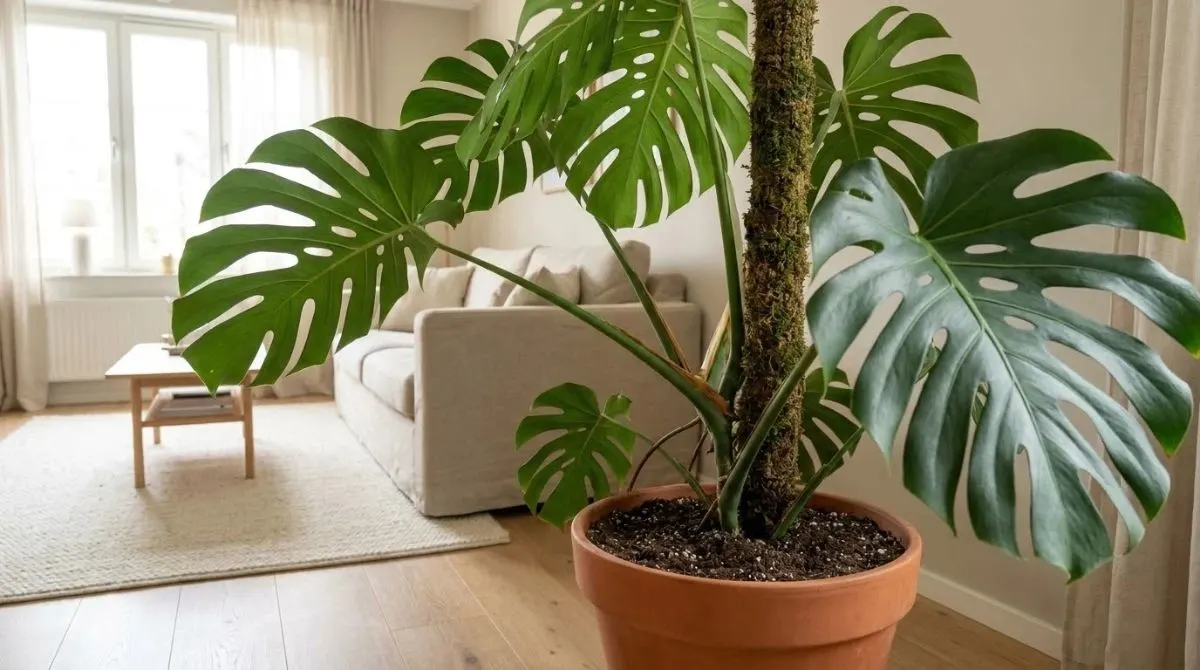
Bigger Monstera leaves are not about a product or trick. They come from conditions: strong indirect light, room for roots to grow, regular feeding, decent humidity, and something to climb. Get those right. Keep at it, and the next leaf your Monstera produces should already look a little more impressive than the last.

Written by Michael Breg
Studio Writer.
Enjoyed this informational guide?
Discussion (0)
No comments yet. Be the first to share your thoughts or ask a question!
Join the Discussion
Your email address will not be published. Required fields are marked *
More from Gardening
7 Ways to Grow Indoor Plants in Low Sunlight Apartments (Beginner-Friendly Guide)
Living in a low-light apartment doesn't mean you can't enjoy beautiful indoor plants. Discover 7 practical ways to grow healthy houseplants with minimal sunlight, plus the best plant choices and beginner-friendly care tips.