12 Stunning Climbing Pothos Ideas for Indoor Plant Lovers
Turn your walls and empty corners into a lush green display. Discover thirteen ways to train your pothos to climb, from simple moss poles to trellises, and learn the care tips that keep those pothos vines thriving.

Michael Breg
EDITOR
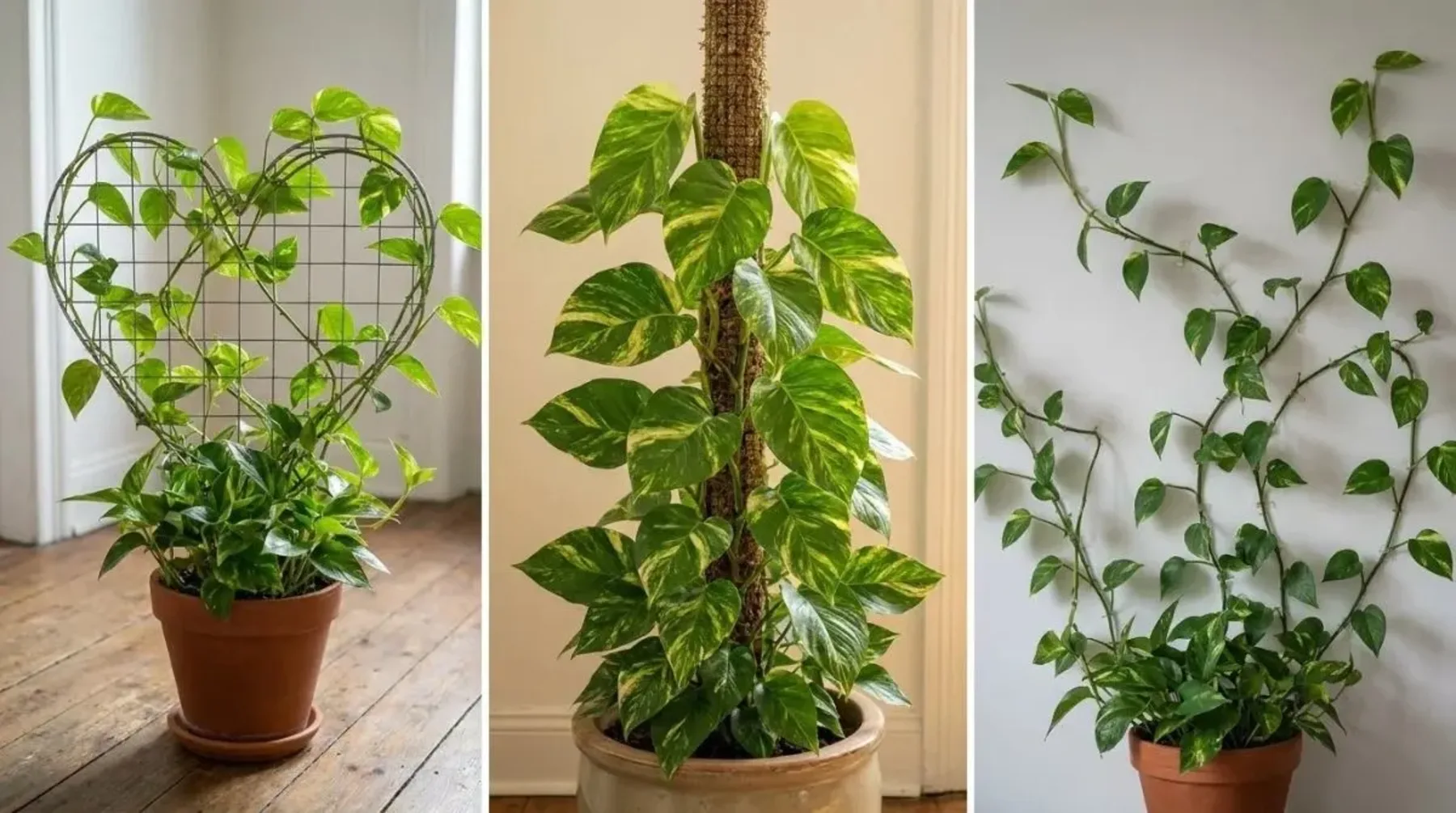
Have you probably seen those photos, right? The ones where pothos vines climb up a wall or wrap around a window frame like something out of a fairy tale. You have wondered, "How do people even get their pothos to look like that?" Meanwhile, your pothos is just trailing off the shelf doing its thing. Here is the good news: pothos is not a trailing plant. In the wild, pothos is actually a climber, using roots to latch onto tree trunks and grow upward toward the light. When you give your plant something to climb, like a moss pole, trellis, or even a plain wall, you are not doing anything.
Without any further delay, let’s get into the 13 most adorable yet easy climbing pothos ideas.
Heart-Shaped Pothos Trellis
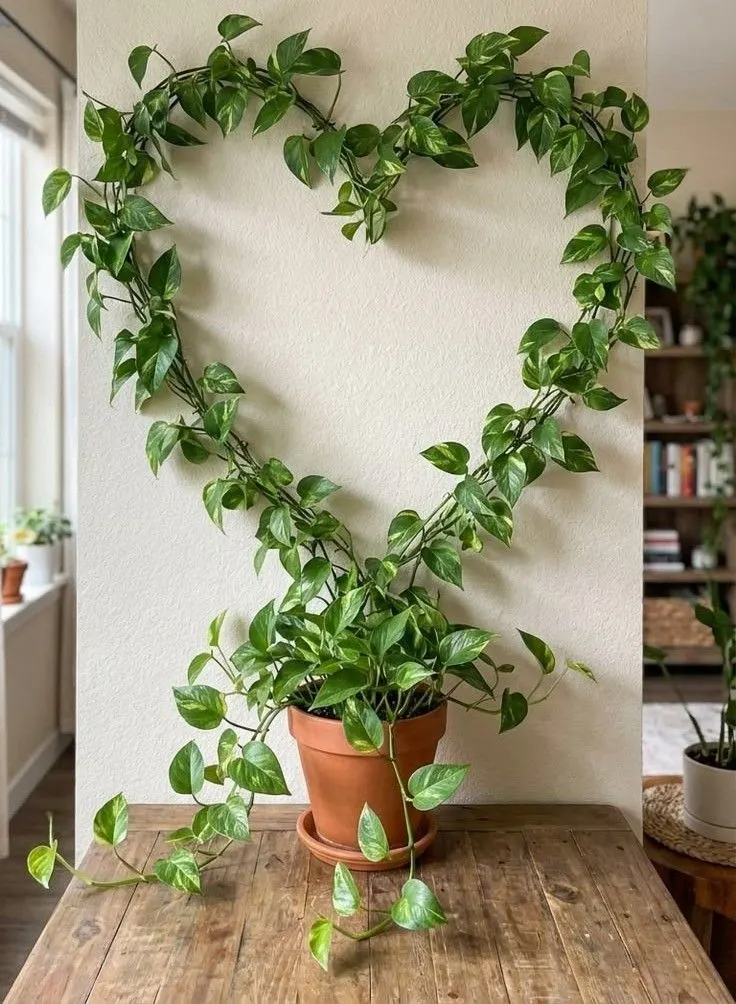
A heart-shaped wire frame is filled with a pothos vine trained to follow its outline, creating a leafy silhouette on the wall. The vine grows up from a terracotta pot on the floor with tendrils trailing for a relaxed, natural look. This design works as a focal point above a plant stand or in a cozy corner. It's charming, symmetrical, and full of personality once the vine fills out. A heart-shaped wire frame is filled in by a pothos vine trained to follow its outline, creating a leafy silhouette on the wall. The vine grows up from a terracotta pot on the floor with tendrils trailing for a relaxed natural look. This design works as a focal point above a plant stand or in a cozy corner. It's charming, symmetrical, and full of personality once the vine fills out.
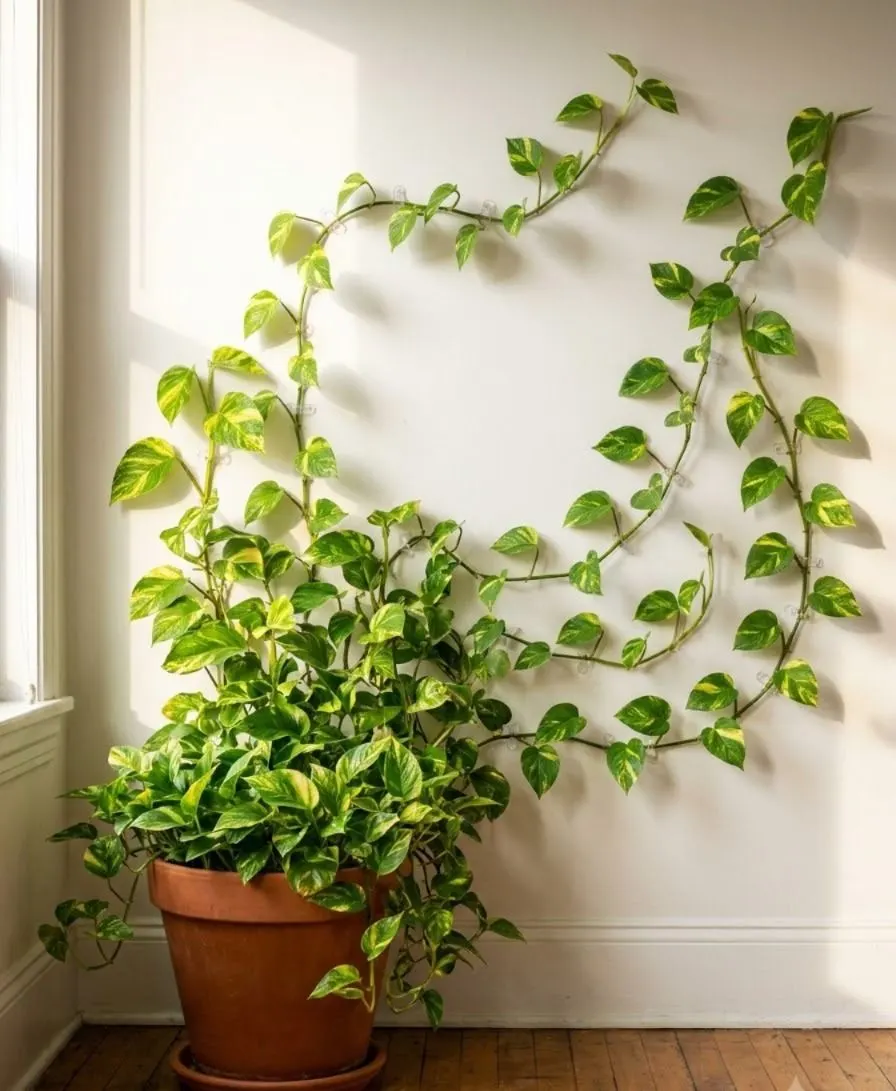
Wall-Mounted Vines
Small adhesive hooks or clips let you guide pothos vines directly across a wall, essentially turning your plant into living wall art. Unlike a painting or poster, this piece keeps evolving. The vine grows, sprouts new leaves, and shifts direction every week. It works beautifully as a feature wall behind a couch, bed, or workspace, adding depth without needing furniture. Because pothos is so forgiving, you don't need to worry about care schedules to keep the display looking full. Over time, you can extend the pattern further, framing doorways or connecting plants into one vine map. It's a budget-friendly way to fill empty wall space with personality.
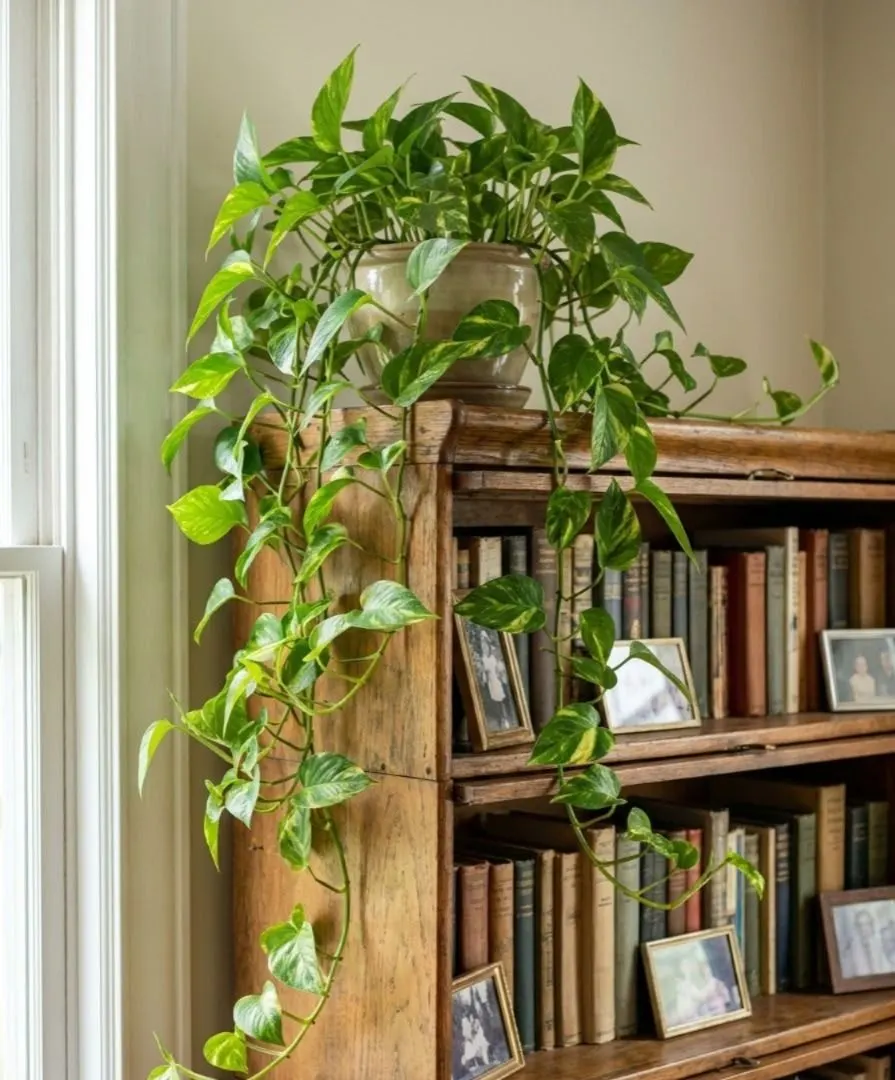
Bookshelf Cascade
Letting pothos spill down the sides of a bookshelf softens the lines and hard edges shelves usually have. It creates a transition between your books, decor pieces, and the surrounding room, like the plant is holding the whole display together. As the vines lengthen, they drape over spines and edges, giving a mismatched shelf a curated editorial look. This idea works well in home offices or living rooms where you want a cozy, lived-in feel rather than a sterile one. Pothos also tolerates the light most shelves receive, so it thrives without needing to be moved. The result is a shelf that feels intentional, layered, and effortlessly green.
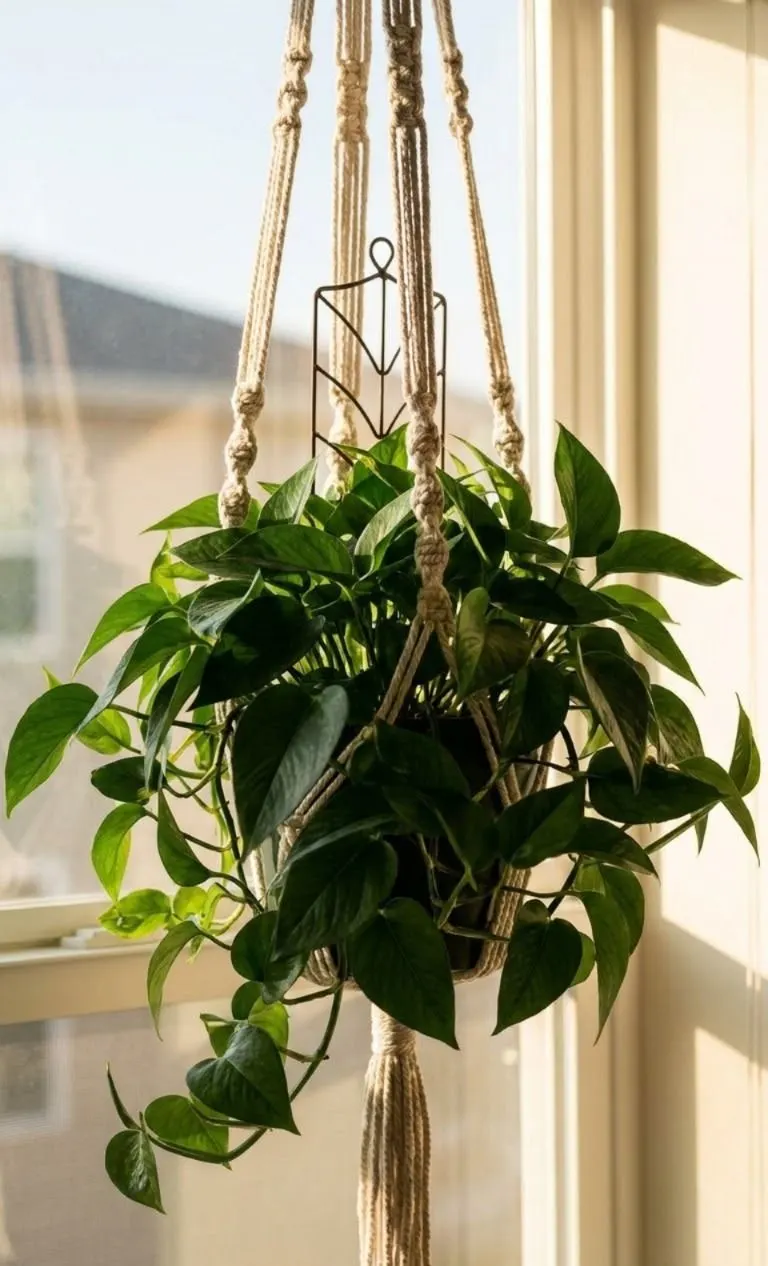
Macrame Hanger Climb
Pairing a macrame hanger with a trellis or hook lets your pothos grow in two directions at once. Trailing down elegantly while also climbing upward. This dual-direction growth gives you coverage in space, which is perfect for smaller rooms or corners that need a bit more life. The macrame adds a boho element that pairs with the plant's smooth, glossy leaves. Over time, the vine will start to blend the hanger and support structure together, creating one sculpture. It's a low-maintenance way to add both height and depth to a room.. Macrame hangers come in colors and knot patterns so you can easily match your personal style.
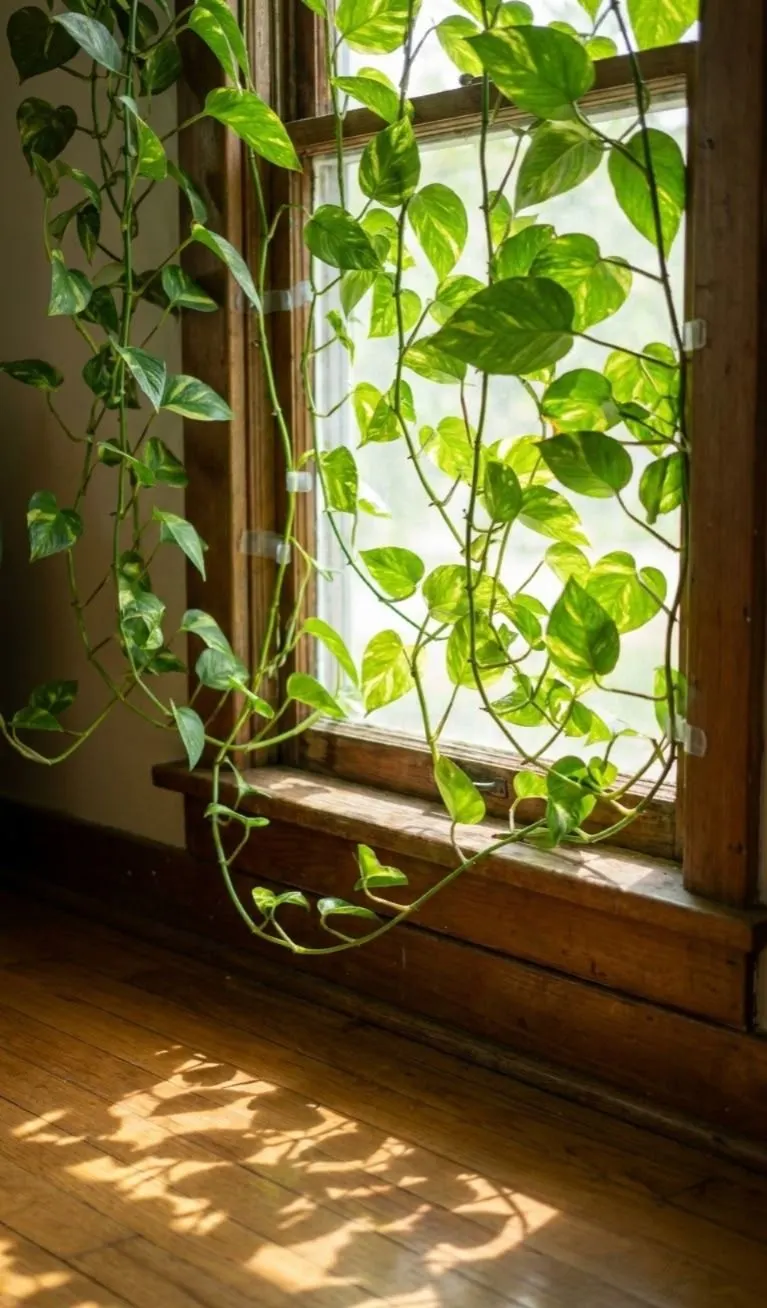
Window Frame Vines
Training a pothos vine around a window frame turns light into a design feature rather than just a functional element. As sunlight filters through the leaves, it creates patterns on the floor and walls, giving the room a calming, almost outdoorsy feel. This idea works well in kitchens, home offices, or reading nooks where you spend a lot of time near the window anyway. You can use clips or nails to guide the vine along the frame without damaging the wall or window trim. Over time, the vine will fill in the corners and edges, framing your view of the outdoors with living greenery. It's a way to make a window feel like a point instead of just an empty space.
Moss Pole Support
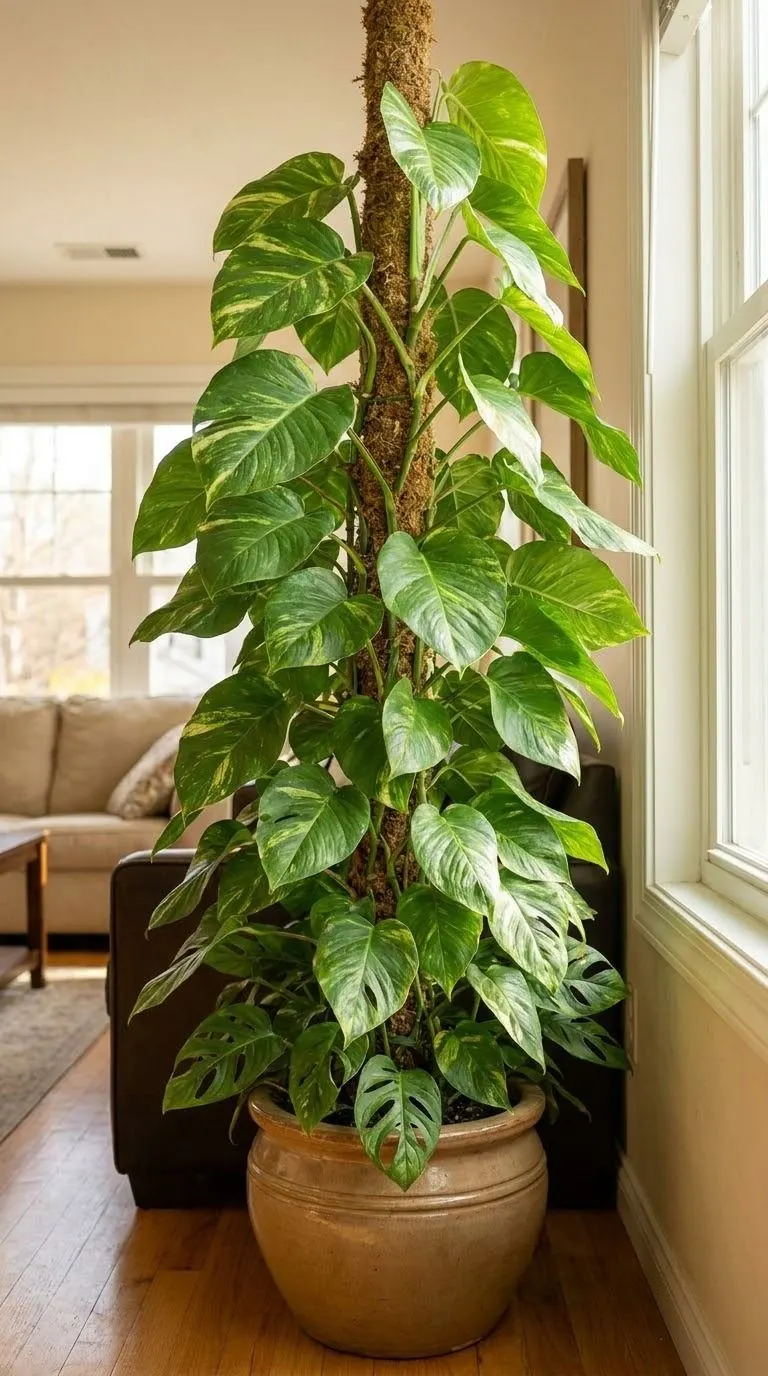
A moss pole gives your pothos something to grip onto, encouraging it to grow leaves more than it would if left to trail on its own. This happens because climbing pothos naturally produce foliage when supported, mimicking how they'd grow in the wild against trees. The moss also retains a bit of moisture, which can benefit the plant's roots as they cling to the surface. Visually, a moss pole gives your pothos an established look, almost like a smaller version of a jungle vine. It's an option if you want a statement plant rather than a sprawling display across furniture or walls. Over time, this setup can make one plant look like an indoor jungle corner.
Lattice Room Divider
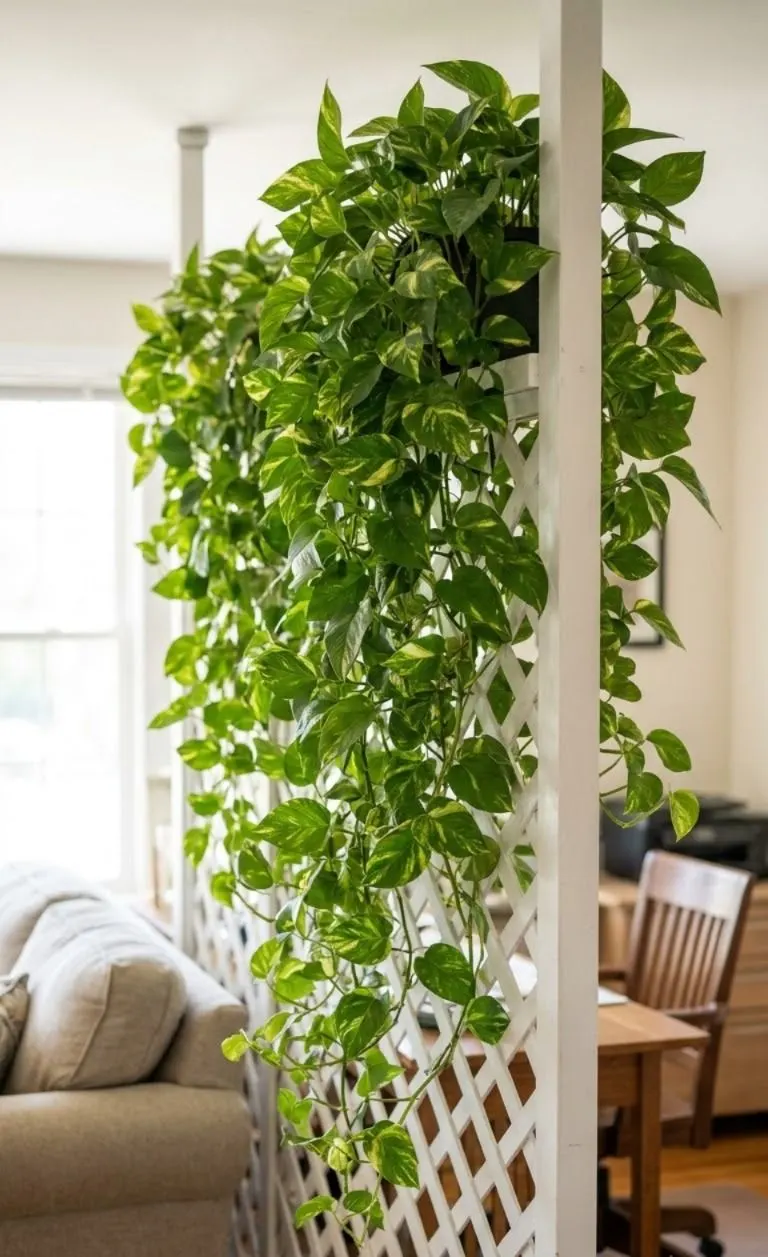
Growing pothos across a lattice screen creates a natural room divider that separates spaces without closing them off. Unlike a wall or curtain, the greenery keeps the room feeling open, airy, and connected while still offering some privacy. This works well in studio apartments, open-plan living rooms, or home offices where you want to define zones without construction. As the vines fill in the lattice pattern, the divider becomes more solid and lush, like a living wall. It also doubles as an air-purifying feature since you're essentially adding a wall of plants to your space. Over time, this idea can become the eye-catching element in the room.
Staircase Railing Drape
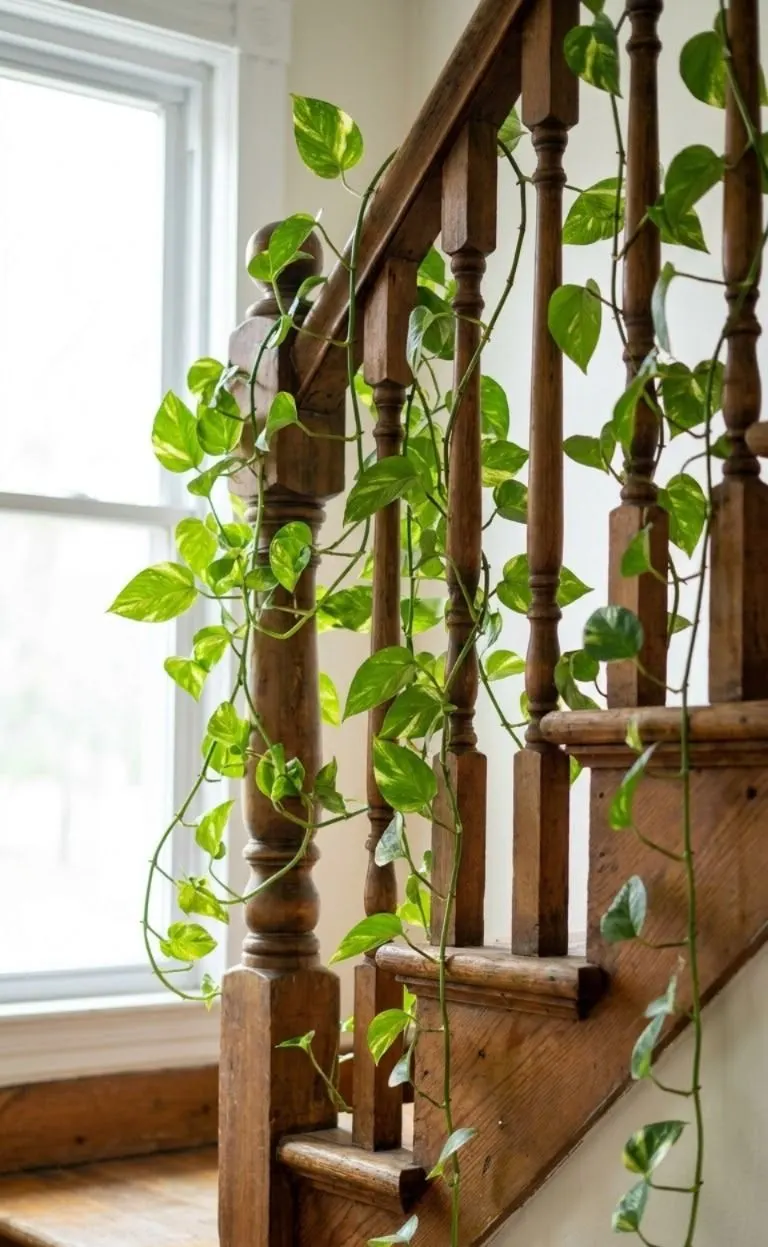
Winding pothos vines along a staircase railing instantly gives the space a cottage core charm that's hard to achieve with decor. Staircases are often overlooked in home design. A trailing plant can turn a hallway or stairwell into a memorable feature. As the vine grows longer, it drapes gracefully over each step or baluster, creating a flowing line through the space. This idea works well because staircases usually get light, which pothos thrives in without much extra care. It's also a great conversation starter for guests since it's a place to find a houseplant. Over time, the vine can be trained to wrap around levels, making your staircase feel like an indoor garden pathway.
Kitchen Shelf Trailing
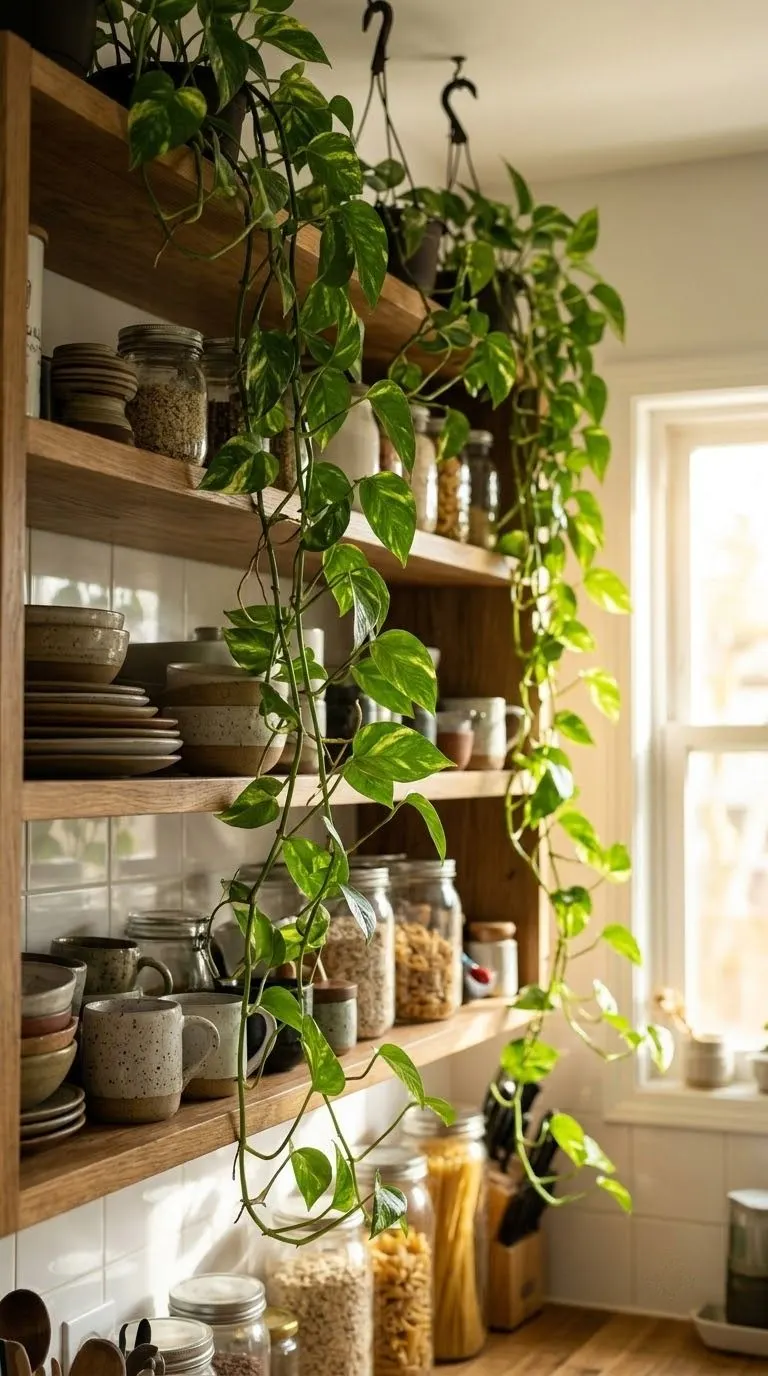
Adding hooks above open kitchen shelving lets pothos vines trail down naturally, bringing an earthy element into a usually utilitarian space. Kitchens can often feel sterile or overly functional, and a trailing plant softens that by adding texture and color near your dishes or cookware. Since pothos tolerates occasional neglect, it's one of the few plants that can genuinely survive kitchen conditions like steam and temperature changes. As it grows, you can redirect the vine around cabinet edges or windowsills for added visual interest. This idea also makes your kitchen feel more like an extension of your living space than a separate purely functional room. It's an addition that makes a big difference every time you walk in.
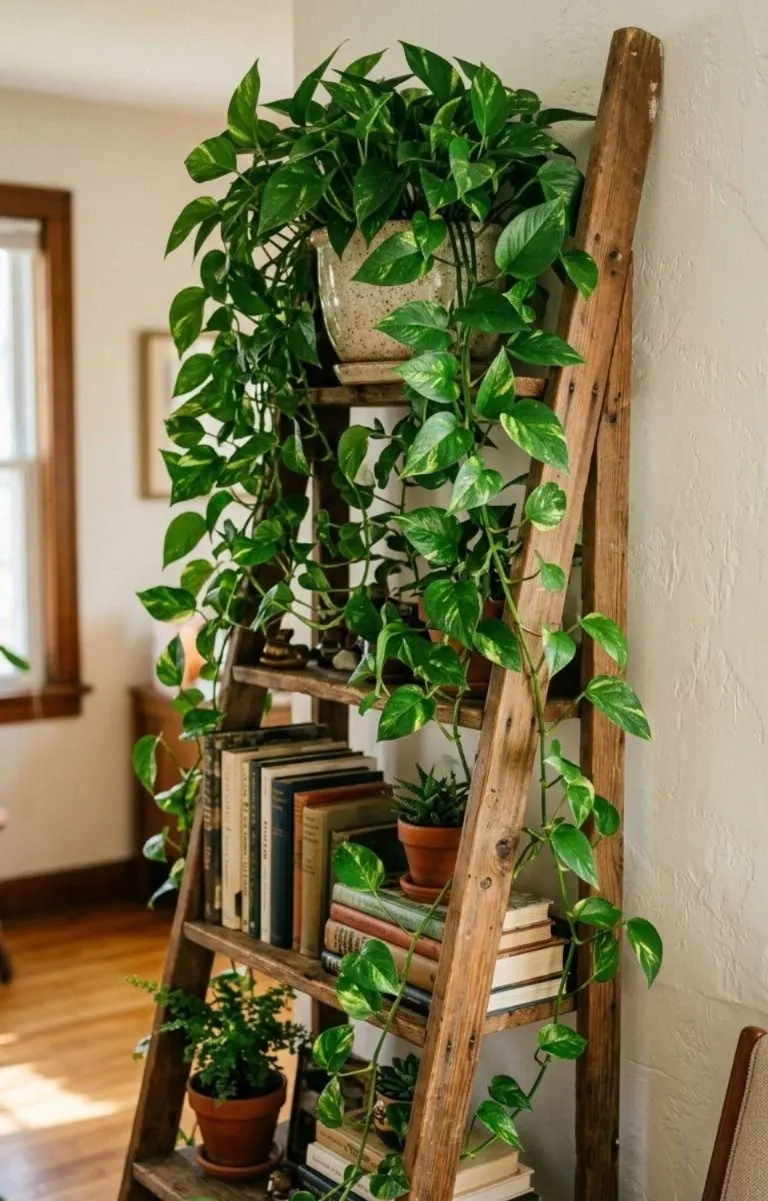
Ladder Shelf Display
Using a decorative ladder shelf as a climbing structure lets you combine design elements. Books, decor, and plants. Into one layered, interesting display. As the pothos climbs and drapes across each rung, it breaks up the lines of the ladder. Gives the whole piece a softer, more organic feel. This setup works well in living rooms, bedrooms, or even hallways where you want a piece that also brings some greenery. Because ladder shelves have levels, you can let the vine grow across two or three rungs, creating a cascading effect from top to bottom. It's a way to mix storage with a plant display without needing extra wall space or hardware. Over time, the ladder becomes almost unrecognizable underneath all the trailing leaves, turning it into a statement piece.
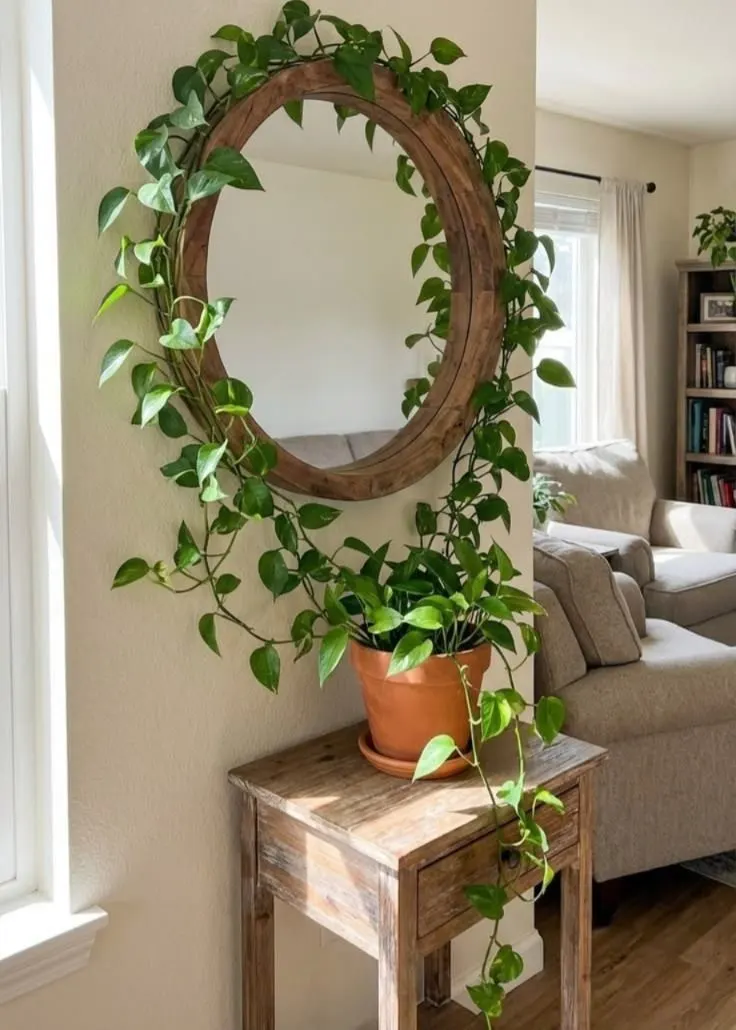
Mirror Pothos Wreath
A mirror gets a living upgrade with pothos vines trained to drape around its top and sides like a wreath. The vine spills from a terracotta pot on a side table below the mirror, climbing up and cascading back down naturally. This design blends. Greenery softens the mirror's edges with organic movement. It's a way to bring life to a hallway or living room accent wall.
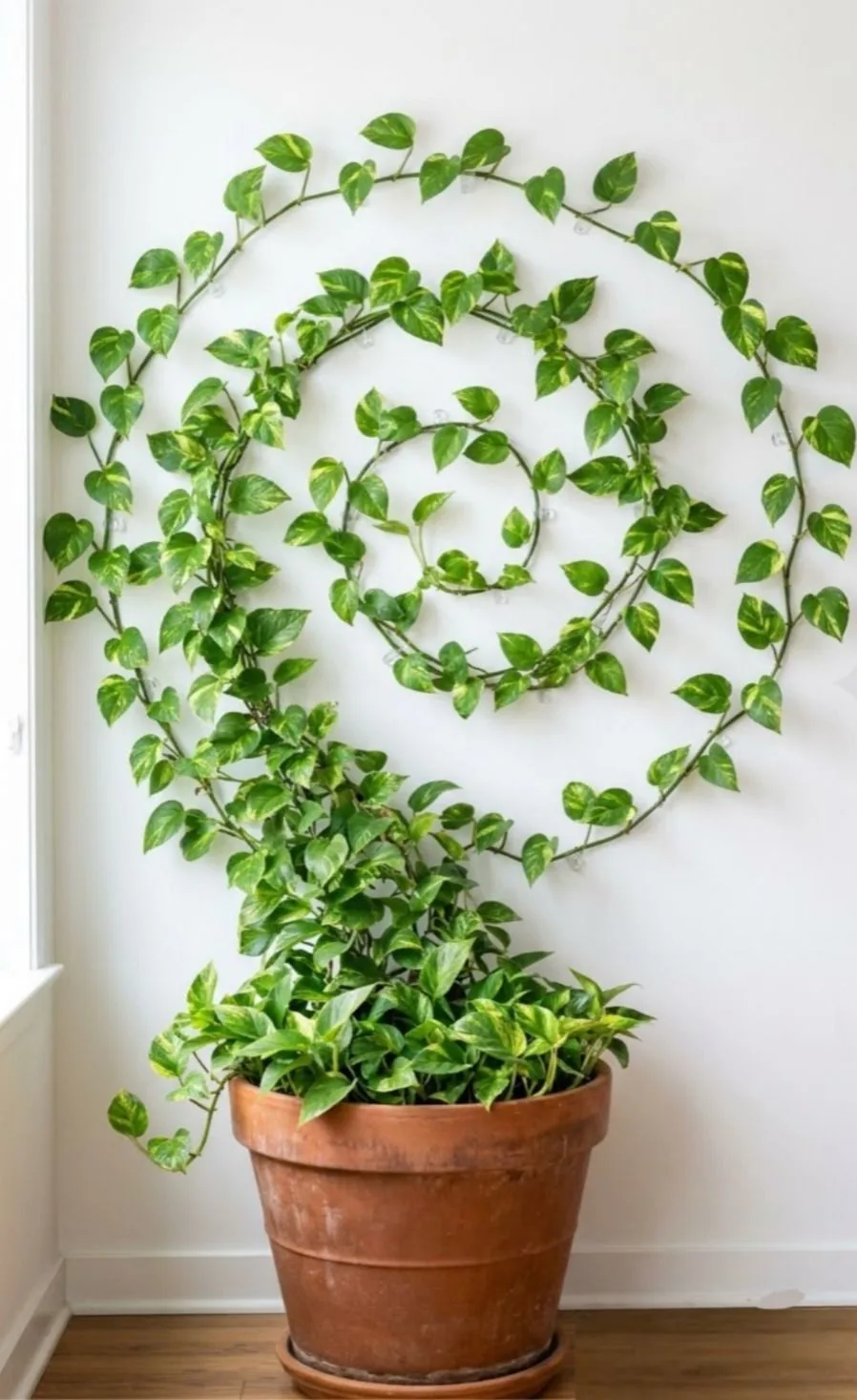
Spiral Pothos Trellis
There's something quietly mesmerizing about a pothos trained into a winding spiral. What starts as a potted plant on a terracotta base unravels into loops that climb the wall like a green vine finding its own rhythm. Each pothos leaf seems to know where it is headed, tracing the curve without a single wasted turn. This kind of piece makes a plain wall feel intentional, like living art instead of just decor. Pothos is forgiving enough for this kind of styling, so it keeps its shape and color with little fuss. This is a reminder that a low‑maintenance houseplant can still make a bold visual statement when one gives it a little structure to grow into.

Written by Michael Breg
Studio Writer.
Enjoyed this informational guide?
Discussion (0)
No comments yet. Be the first to share your thoughts or ask a question!
Join the Discussion
Your email address will not be published. Required fields are marked *
More from Gardening
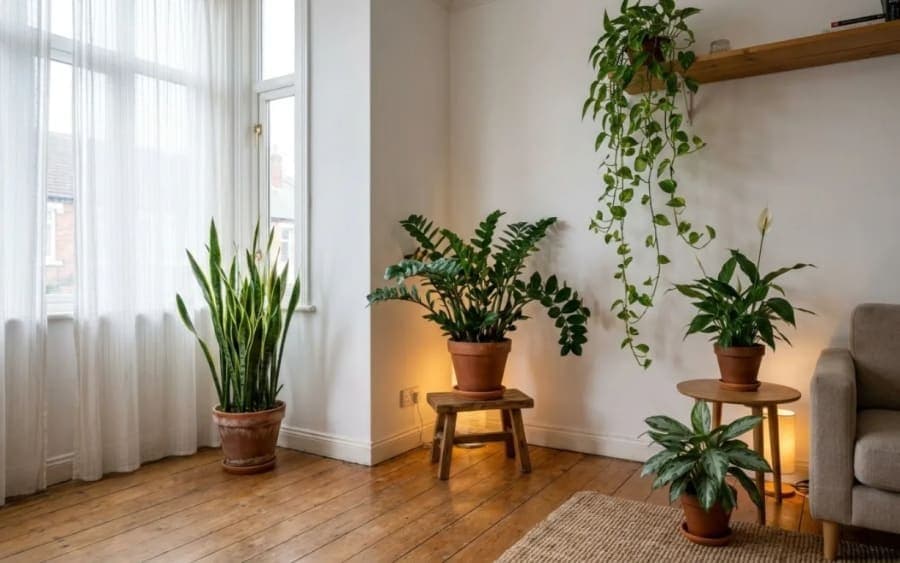
7 Ways to Grow Indoor Plants in Low Sunlight Apartments (Beginner-Friendly Guide)
Living in a low-light apartment doesn't mean you can't enjoy beautiful indoor plants. Discover 7 practical ways to grow healthy houseplants with minimal sunlight, plus the best plant choices and beginner-friendly care tips.